
Owning a luxury mechanical timepiece is an incredible milestone. It represents not only a personal achievement but also a profound investment in a legacy piece that can easily be passed down through generations. However, inside the robust, waterproof case of every mechanical watch lies a microscopic universe of highly engineered gears, springs, and jewels working in constant, relentless motion. Over time, the specialized synthetic oils that lubricate these tiny metal components gradually degrade. When this inevitably happens, internal friction increases, which can severely affect both the chronometric accuracy and the long-term mechanical reliability of your valuable asset.
Whether you are simply searching for watches at the best prices to begin building your collection, or you have just acquired your absolute grail piece from a trusted luxury watch dealer, understanding the complete maintenance lifecycle is a critical aspect of horological ownership. Today, we are breaking down the official manufacturer guidelines versus real-world master watchmaker advice. By the end of this comprehensive guide, you will know exactly when it is time to bring your timepiece into a reputable Rolex watch dealer for a complete mechanical overhaul, ensuring your investment remains in absolute perfect running condition for decades to come.
Table Of Contents: The Maintenance Blueprint
- 1. The Official 10 Year Rule Versus Real-World Horology
- 2. The Reddit Consensus: What Do Actual Collectors Say
- 3. Warning Signs Your Watch Needs Immediate Attention
- 4. The 2026 Service Cost Breakdown And 9 Step Process
- 5. Authorized Service Center Versus Independent Watchmakers
- 6. Vintage Care And Preserving Financial Value
The Official 10 Year Rule Versus Real-World Horology
The horological landscape underwent a fundamental transformation in 2015 when the manufacturer officially updated their maintenance recommendations. For decades, the standard advice across the entire Swiss watchmaking industry was to undergo a full movement overhaul every five years. This was largely due to the physical limitations of traditional watchmaking oils that would eventually dry out, coagulate, or drift away from the delicate jewel bearings they were meant to protect.
However, the introduction of cutting-edge materials and highly advanced synthetic lubricants radically changed the mechanical equation. Modern movements now feature incredible friction-reducing innovations. Because these internal components operate so efficiently, the official manufacturer recommendation was updated to state that modern watches should undergo a complete Rolex service approximately every 10 years under normal wearing conditions.
While this 10-year timeline is a brilliant testament to incredible Swiss engineering, it remains strictly a general guideline that does not account for individual wearing patterns or specific use cases.
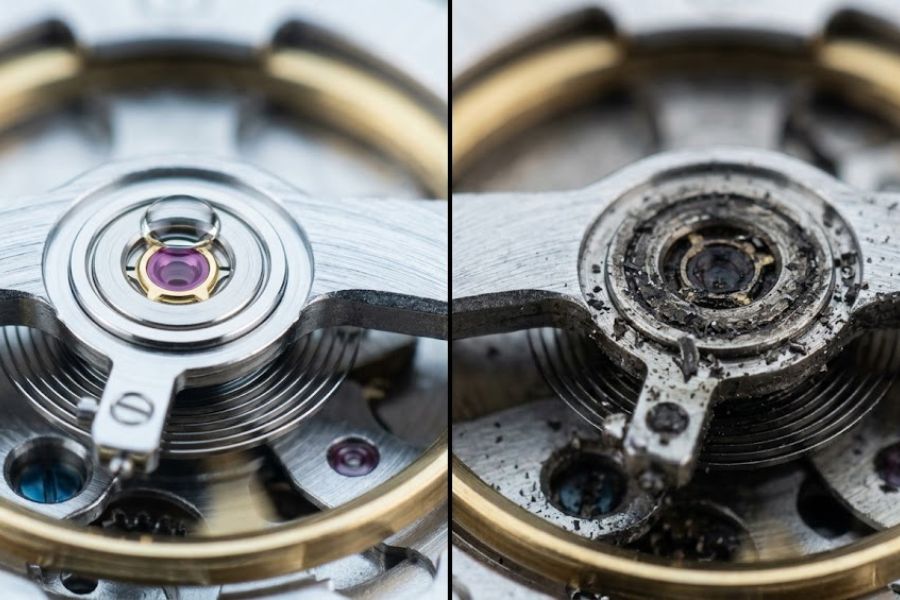
The Daily Wearer Guideline
If you strap your timepiece to your wrist every single morning, the internal movement is subjected to constant physical motion, varying spatial positions, and daily temperature changes. In a city like Toronto, a watch might experience freezing winter temperatures outside and dry, heated environments indoors all within the same hour. Active use can introduce moisture, temperature variations, and shock that directly affect performance. When you choose to shop Rolex watches for daily use, keeping them in peak condition requires mindful ownership.
For daily wearers, most independent experts and horological technicians highly recommend scheduling a full Rolex service every 5 to 7 years for optimal performance. Waiting a full decade for a watch that never leaves your wrist is a massive financial gamble. When lubrication completely dries up, the movement experiences aggressive metal-on-metal friction. This friction generates microscopic metal shavings that act like sandpaper inside the caliber, rapidly destroying expensive gears and pivots.
The Reddit Consensus: What Do Actual Collectors Say
Official manuals and technical documents are incredibly valuable, but how does the actual community of passionate collectors treat their timepieces in reality? If you dive into the active discussion boards on Reddit, specifically within the massive collector communities, you will find a fierce, ongoing debate regarding maintenance schedules.
The Wait And See Approach
A massive, highly vocal portion of the online collector community strongly adheres to the philosophy of leaving the watch entirely alone until it actively presents a mechanical problem. Numerous users report wearing their rugged, stainless steel sports models every day for 15 or even 18 years without a single service. They argue that because modern parts are so robust, there is no need to open the factory-sealed waterproof case until the watch stops keeping accurate time. They view preventive maintenance as an unnecessary, premature expense.
The Preventive Maintenance Warning
On the other side of the debate, purists and seasoned horologists push back aggressively against this mindset. They warn that waiting for a physical problem to appear means the internal synthetic lubricants have already completely dried out. By the time you notice the hands are dragging or the time is slipping, dangerous friction has already been introduced. These users advocate for strict adherence to the 5 to 7-year interval to ensure the original, factory parts are safely preserved, rather than aggressively ground down and replaced.
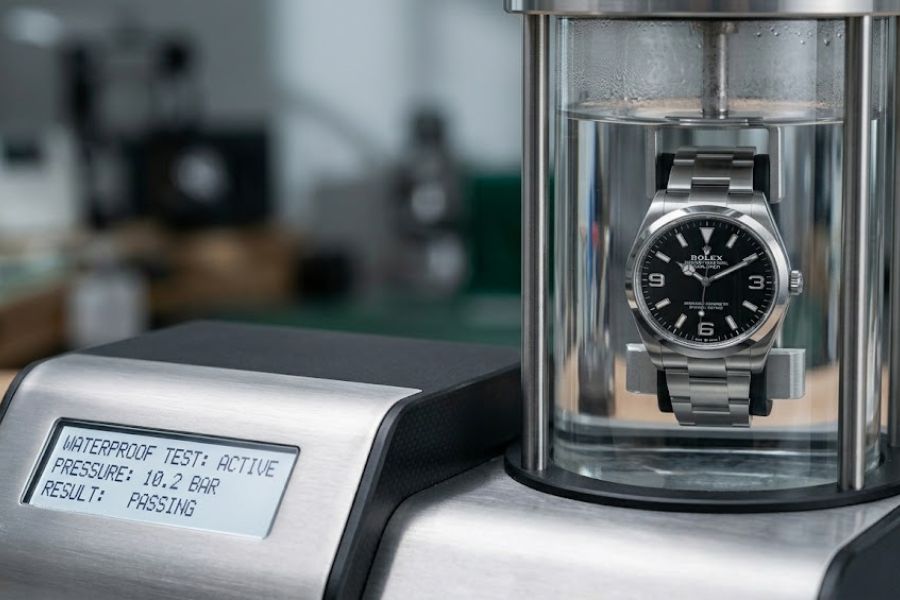
The Water Resistance Factor
The one thing both sides of the collector community agree on is the absolute necessity of water resistance testing. Even if you choose to wait 10 years for a full mechanical overhaul, the rubber gaskets that protect the crown, the crystal, and the case back will inevitably dry out and crack over time. If you frequently use your diving watches or travel extensively, more frequent maintenance checks are highly advisable. The community strongly recommends taking the watch into a professional facility for a basic pressure test every single year to guarantee the waterproofing is intact.
Warning Signs Your Watch Needs Immediate Attention
Even if you have not reached the recommended 7 or 10-year milestone, your mechanical watch will often physically communicate when it is struggling to operate. If you notice any of these specific symptoms, you should seek professional assistance immediately.
- Inconsistent Accuracy: A noticeable, sudden shift in precision is the most common early indicator of failing lubrication. If your watch has always run perfectly but suddenly begins losing or gaining a significant amount of time per day, the movement requires fresh oil.
- Reduced Power Reserve: Modern calibers typically feature a robust power reserve. If you fully wind your watch and leave it stationary, but it stops ticking hours before it should, the mainspring or the automatic winding module is likely compromised.
- Winding Resistance: When you unscrew the crown and manually wind the mainspring, the tactile feedback should be buttery smooth. Any physical resistance, gritty feeling, or grinding noise when turning the crown means immediate mechanical attention is required.
- Moisture Under The Crystal: This is a severe horological emergency. If you see fog, condensation, or actual water droplets inside the glass, the water-resistant seals have catastrophically failed. You must seek a professional Rolex service immediately to prevent permanent rust damage to the steel components and the dial.
To truly understand the incredible complexity of this specialized labor, we highly recommend watching this fascinating behind-the-scenes Instagram service reel. It illustrates the meticulous precision required by master technicians to dismantle and restore a movement.
The 2026 Rolex Service Cost Breakdown
Understanding the proper maintenance interval is crucial, but accurately budgeting for the procedure is equally important. The price of a comprehensive overhaul varies heavily based on the complexity of the movement inside your specific reference.
According to official 2025 and 2026 industry data, a standard Rolex service costs between $800 and $1,200, but the price can climb to over $2,000 depending on the model, its age, and the parts required.
| Model Type | Estimated Starting Service Cost | Recommended Daily Wear Interval |
|---|---|---|
| Oyster Perpetual / Datejust | $800 to $1,000 | 5 to 7 Years |
| Submariner / GMT Master II | $800 to #1,200 | 5 to 7 Years |
| Day Date President | $1,000 to $1,300 | 5 to 7 Years |
| Daytona Chronograph | $1,300 to $1,600 | 5 to 7 Years |
| Sky Dweller | $1,400 to $1,600 | 5 to 7 Years |
The 9 Step Overhaul Process Explained
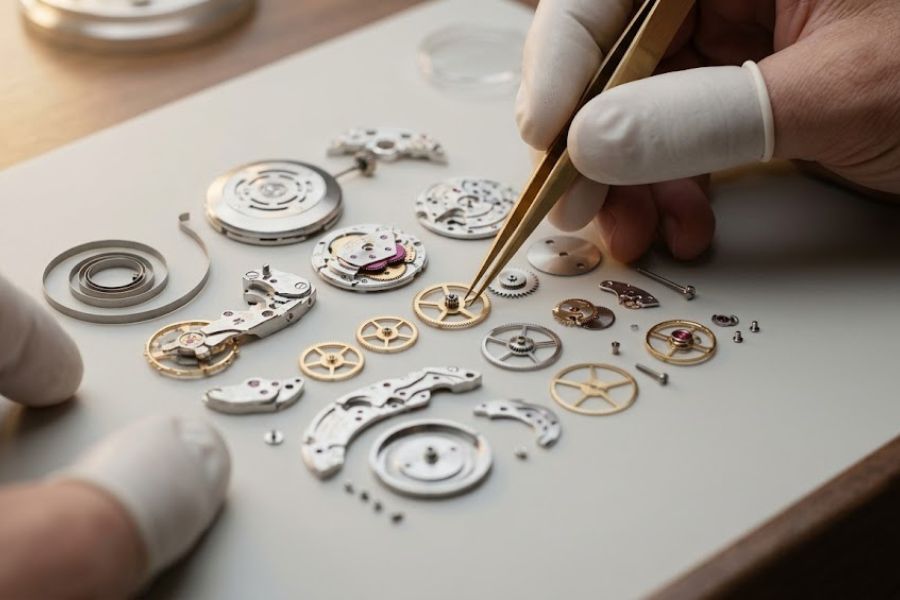
To fully justify the cost of luxury maintenance, you must understand the immense labor involved. A true Rolex service is a meticulous 9-step overhaul.
- Diagnosis And Estimate: The watch is carefully examined by a watchmaker, who draws up an estimate of the work to be done. The condition of critical components is assessed before beginning any physical work.
- Complete Disassembly: The movement is completely removed from the case, and every single microscopic component is separated and cataloged for individual attention.
- Ultrasonic Cleaning: Each component is cleaned in an ultrasonic cleaner to remove all traces of impurities. This removes old oils, dirt, and microscopic particles that could interfere with proper function.
- Detailed Component Inspection: Any damaged gears or jewels are identified and replaced to ensure flawless mechanical integrity.
- Reassembly And Lubrication: The cleaned components are dried, after which the movement is entirely reassembled and lubricated.
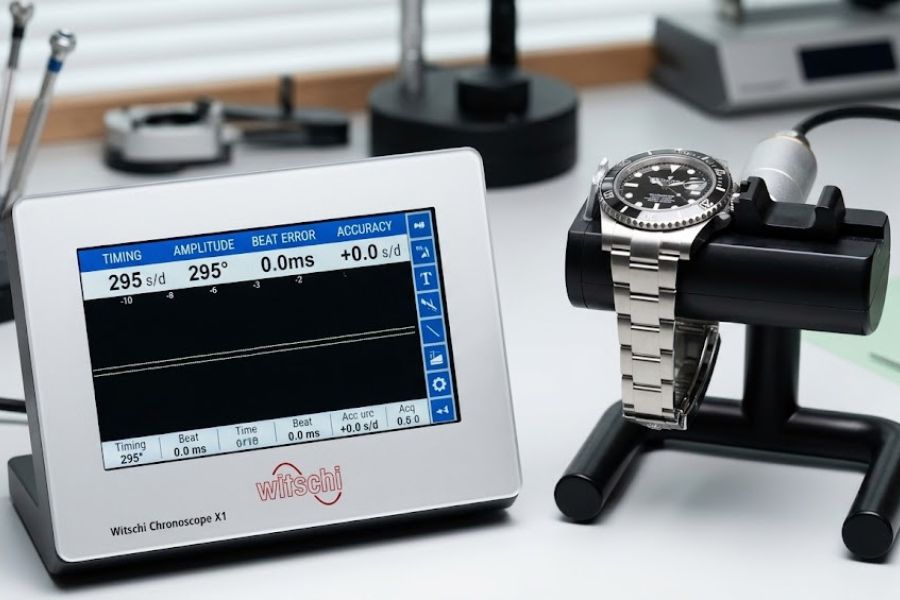
- Timing And Calibration: The watch is regulated to meet strict chronometer-level accuracy standards of minus two to plus two seconds per day.
- Cosmetic Refinishing: The case is completely disassembled, and the middle case, bezel, case back, and bracelet are re-polished or satin-finished according to their original finish.
- Case Reassembly And Sealing: After being cleaned and refinished, the case parts are reassembled and the seals replaced.
- Water Resistance Testing: The case is tested for waterproofness to ensure all seals maintain their integrity under pressure.
Authorized Rolex Service Center Versus Independent Watchmakers
When the time finally arrives for an overhaul, collectors face a massive decision regarding who actually performs the highly technical work. Choosing your service center is a critical decision.
The Official Factory Philosophy
Sending your watch to an official center guarantees the use of genuine factory parts and provides the owner with a two-year international warranty. However, collectors must understand that the official factory philosophy is one of complete renewal. If components like hands, dials, or faded bezels no longer meet their modern aesthetic specifications, the factory will often replace them as a strict policy.
The Independent Preservation Approach
Alternatively, building a relationship with a skilled, highly reputable independent watchmaker offers significantly more flexibility. Independent technicians tend to focus on preservation rather than aggressive replacement. They will actively work with the owner to retain original parts and respect the watch’s natural patina. Furthermore, independent service centers offer more competitive pricing and a faster turnaround time.
Vintage Care And Preserving Financial Value
If you are passionate about collecting vintage pieces, regular servicing is arguably more critical. Vintage Rolex watches, typically defined as models manufactured before 1990, benefit from more frequent servicing every 3 to 5 years. Older movements use different lubricants and materials that require more attention, and vintage parts are irreplaceable once damaged.
Beyond pure mechanical function, maintaining a documented, consistent service history can drastically increase the financial value of the timepiece. In fact, a documented service history can increase your watch’s resale value by as much as 15 percent. Serious collectors are willing to pay a massive premium for a watch that comes with a full stack of receipts, proving the previous owner cared for the asset properly. For further detailed guidelines on preserving global horological asset value, we recommend reviewing the extensive educational resources provided by the Federation of the Swiss Watch Industry.
Purchasing With Confidence At Toronto Watch Exchange
Taking meticulous care of a luxury timepiece ensures it will run accurately and flawlessly for generations, serving as a reliable heirloom that transcends time. Navigating the secondary market can occasionally feel intimidating, but understanding the true mechanical health of a watch is your ultimate shield.
If you are looking to add a fully serviced, pristine piece to your collection, Toronto Watch Exchange is your ultimate destination. We pride ourselves on offering a highly curated inventory of authentic Rolexes that have been rigorously inspected and fully vetted by master technicians before ever entering our secure vault. We guarantee that every single piece we offer meets the absolute highest standards of chronometric precision and aesthetic beauty.
Whether you are browsing our premium selection of Rolex watches for sale, seeking out specific vintage references, or looking for exceptional everyday value within our expansive collection of pre-owned watches, we provide total transparency and mechanical perfection. We ensure our clients receive the exact models they desire without ever compromising on quality or authenticity.