
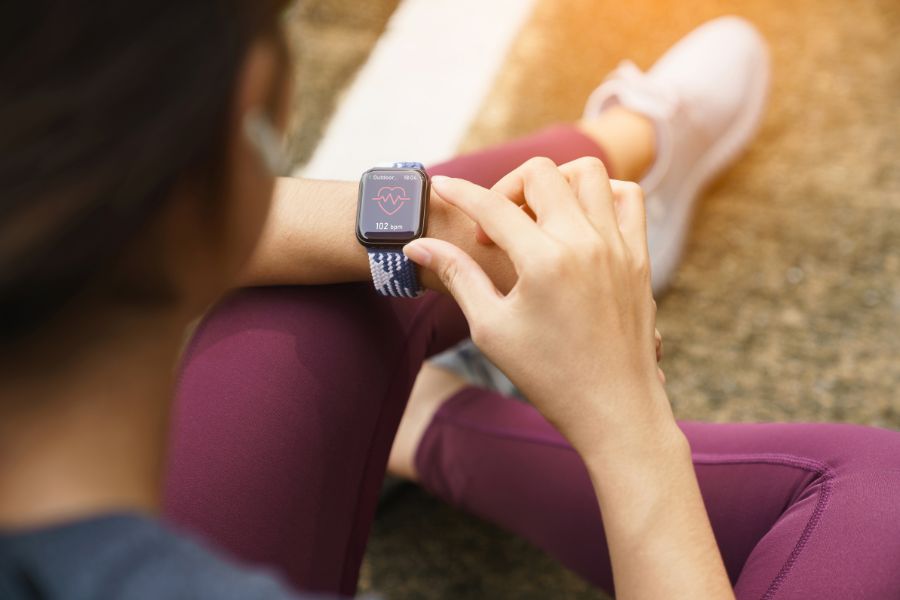
You probably feel it right now as you are reading this. That phantom buzzing on your wrist that never seems to stop. Maybe it is a text from your boss asking for a file, a reminder to “stand up” because you have been sitting too long, or just an alert that your heart rate went up slightly while you were stuck in traffic on the Gardiner Expressway. We have all been there, and we know the feeling well. That black square on your wrist has become the unofficial uniform of Toronto’s busy professionals. It is convenient because it unlocks your laptop and pays for your coffee, but let’s be honest for a second here. It is also a leash that keeps you tied to the digital world. This is exactly why the movement from Apple Watch to automatic timepieces is gaining so much momentum right now.
Making the jump from an Apple Watch to a Swiss automatic isn’t just about changing what you wear. It is about changing how you live. It is a decision to value permanence over the temporary, and artistry over algorithms. If you are reading this, you are likely feeling that “tech fatigue.” You are tired of the constant upgrades and the notifications that slice up your attention span.
At Toronto Watch Exchange, we see this transition happen every day. We see the relief on a client’s face when they trade a gadget that will be obsolete in three years for a timepiece that could last three generations. This is the guide we wish we had when we started our own collecting journeys. A deep dive into why trading pixels for gears is the best move for your wallet, your style, and your peace of mind.
Why the Move from Apple Watch to Automatic is Necessary
Let’s talk about the drawer. You know the one. It is in your kitchen or your bedside table, and it is a graveyard of old iPhones, tangled charging cables, and maybe an old Fitbit or Apple Watch Series 3. That drawer is the physical proof of “planned obsolescence.”
Modern tech is designed to die. An Apple Watch is a marvel of engineering, but its heart is a lithium-ion battery that starts degrading the moment you turn it on. In three or four years, it won’t hold a charge through the day. In six years, it won’t run the latest software. It becomes e-waste. You don’t really own it. You are essentially renting the technology until the next keynote speech tells you it is time to upgrade.
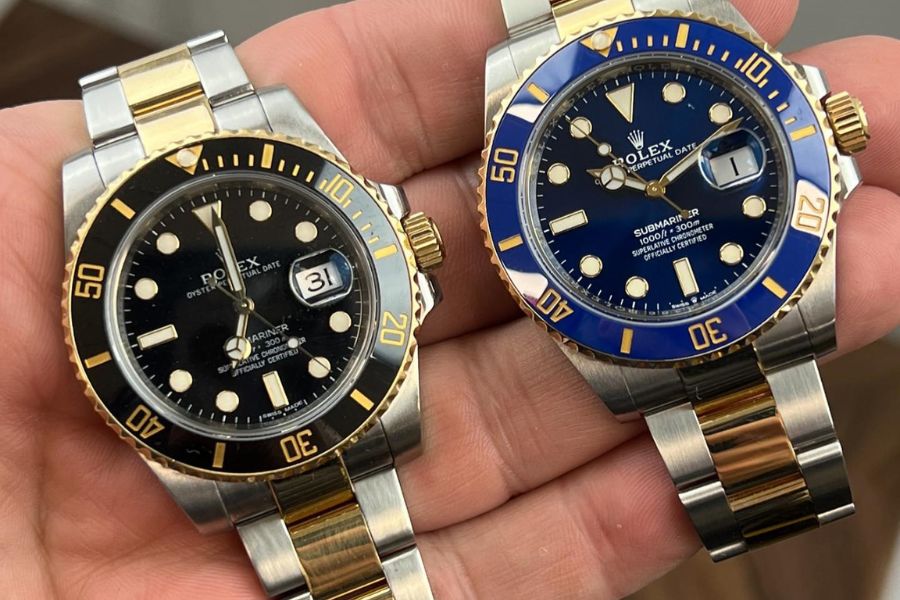
Now, compare that to a mechanical watch. A Swiss automatic movement doesn’t care about software updates. It runs on physics. Gears, springs, and levers. It is powered by you. The kinetic energy of your arm swinging while you walk down Queen Street is what keeps the heart beating. If you take care of a Rolex Submariner or an Omega Speedmaster today, it will still be ticking in the year 2125. That is not an exaggeration. It is a fact. We service vintage watches from the 1960s that run just as accurately today as they did when they were new. That is the difference between buying an appliance and buying an heirloom.
Why “Smart” Doesn’t Always Mean “Better”
- The Leash Effect: Smartwatches keep you tethered to work 24/7. A mechanical watch cuts the cord.
- Charging Fatigue: You have enough things to charge. Your watch shouldn’t be one of them.
- Soul vs. Silicon: One is mass-produced by robots. The other is hand-assembled by artisans.
Financial Safeguard: Real Numbers Behind Apple Watch vs Swiss Automatic
When comparing the Apple Watch to an automatic, the financial difference becomes clear once real figures are involved. A new Apple Watch typically costs $500 to $900 CAD and loses roughly 60 to 70 percent of its value within 24 months. After four to five years, resale value is often under $100 or nonexistent. A Swiss automatic watch tells a different story. A pre-owned Rolex Datejust purchased around $7,500 CAD can still resell for $7,000 to $8,000 CAD years later if properly maintained. Even servicing every five to seven years, usually $800 to $1,200 CAD, preserves value instead of destroying it.
When you buy a used Rolex, Patek Philippe, or even robust brands like Tudor and Breitling, you are parking your money in a wearable asset. Luxury watches operate on a scarcity model. Rolex produces a limited number of steel sports watches per year, yet the demand globally is insatiable. This protects the value. In many cases, specific models have actually appreciated in value over the last decade. You can read more about these trends in the Deloitte Swiss Watch Industry Study, which tracks the resilience of the Swiss market.
We always tell our clients. “Don’t spend your money. Wear your money.” If you buy smart, you can wear a luxury watch for five years, enjoy the status and the feeling on your wrist, and often sell it for close to what you paid. Sometimes even more. Try doing that with a Series 6 Apple Watch.
Smartwatch vs. Mechanical Watch: The 10-Year Outlook
Here is a breakdown of what owning these two very different items looks like over a decade.
| Feature | High-End Smartwatch | Swiss Automatic Watch |
|---|---|---|
| Lifespan | 3 to 5 years (Battery death) | Indefinite (Generational) |
| Value Retention | Loses ~90% in Year 5 | Retains value or Appreciates |
| Power Source | Charging cable (Daily) | Your movement (Kinetic) |
| Obsolescence | Software becomes incompatible | Never becomes obsolete |
| Maintenance | None (Replace device) | Service every 5–7 years |
| Status Symbol | Mass-produced electronic | Sign of success and taste |
The Mental Health Shift For Moving From Apple Watch to Automatic
There is a massive movement happening right now towards “digital minimalism,” and switching your watch is the easiest first step. We hear it all the time from customers who work in high-stress jobs on Bay Street or in the tech sector. They tell us, “I felt like I was constantly wired into the Matrix.”
When you wear a smartwatch, your body is constantly anticipating the next vibration. This raises your baseline cortisol levels. You are never truly off. You’re at dinner with your partner, but your wrist is buzzing about an email from a client. You glance down, just for a second. But the moment is broken. You’ve signaled to the person across from you that they are less important than that notification. Research on digital overload confirms that constant connectivity fragments our attention and increases anxiety.
A mechanical watch does one thing, and it does it perfectly. It tells the time. It represents a mastery of time rather than a servitude to it. When you check a Swiss automatic, you are doing it on your own terms. There is a profound sense of peace that comes with looking at a dial that isn’t trying to sell you anything or alert you to anything. It’s just time. Calm, steady, and beautiful.
Craftsmanship You Can Feel (and See)
If you’re a “techy” person, you may be concerned that a computer on your wrist will be more engaging than a mechanical watch. We assure you that it is the complete opposite. The first high-tech machine was a mechanical movement. Hundreds of tiny parts make up this micro-universe. Rubies, springs, gears, and bridges. operating in perfect harmony.
Examine a watch with a sapphire caseback or a “skeleton” design. The balance wheel is visible as it oscillates back and forth. As you move, you can see the rotor spinning. This engineering has been refined over many centuries. Millions of people didn’t stamp it out on a factory line. A human being who spent years perfecting their craft put it together.
Navigating the Pre-Owned Rolex Market
You are now prepared to make the change. How do you begin? The pre-owned market is, for the majority of people, the best place to start. The value is found here. You can avoid the initial depreciation that some brands (like Tag Heuer or Omega) experience as soon as they leave the boutique by purchasing pre-owned. Additionally, it gives you access to models that aren’t available in stores, like the Rolex Submariner.
But you must be intelligent. If you don’t know what to look for, the world of vintage and pre-owned watches can be challenging.
“Buy the Seller,” Not Just the Watch
When it comes to watch collecting, this is the golden rule. You must have faith in the person you are purchasing from. Every watch that enters Toronto Watch Exchange is thoroughly examined. We make sure it’s authentic, we confirm the provenance, and we examine the movement amplitude.
There are certain things to look for when purchasing a pre-owned Rolex. For instance, verifying a Rolex’s serial number is an essential step. This is engraved on the “rehaut” (the inner metal ring that surrounds the dial) at six o’clock on contemporary Rolex watches. It is concealed between the case’s lugs on older models. This number aids in the watch’s dating and identity verification. If a seller can’t show you this or gets sketchy about it, run the other way.
We handle all this due diligence for you. We ensure that when you buy a watch from us, you are getting exactly what you paid for. A genuine piece of Swiss history.
Finding Your Mechanical Watch Style in the 6ix
Let’s be real. Toronto has a bit of a uniform. In the winter, it’s Canada Goose jackets and Blundstones. In the office, it’s the blue suit and the black smartwatch. Standing out in this city requires a bit of effort, and your watch is the easiest way to do it. It is often the only piece of jewelry a man wears, and for women, it’s a statement of power and elegance that a fitness tracker just can’t match.
Your watch says something about who you are. Are you the adventurous type? A dive watch like the Omega Seamaster suggests durability and action. Are you a creative? Maybe a vintage Cartier Tank shows that appreciation for classic design. Are you a data nerd? A chronograph like the Speedmaster (the watch that went to the moon) shows you love precision.
A Quick Guide for the “Switcher”
If you are overwhelmed by the choices, here are a few perfect entry points for someone coming from an Apple Watch:
- The Everyday “Beater”: Tudor Black Bay. It’s robust, stylish, and costs a fraction of a Rolex while offering similar quality.
- The Icon: Rolex Datejust. It works with a t-shirt and jeans or a tuxedo. It is the definition of timeless.
- The Conversation Starter: Omega Speedmaster. It has a manual wind mechanism (so you interact with it every morning) and a history that involves NASA.
- The Value King: Breitling Superocean. Incredible build quality and water resistance, perfect for Toronto summers by the lake.
Regarding service, yes, you should get a mechanical watch cleaned and oiled every 5 to 7 years. You can learn more about mechanical watch maintenance basics. But compare that to the life of a smartwatch. In 7 years, you would have bought at least two or three new Apple Watches, costing you $1,500 to $2,500. A service on a Rolex might cost $800 to $1,000, and it leaves the watch looking and running like brand new. The math still works in favor of the mechanical.
The Heirloom Factor: You Never Really Own It
“You never actually own a Patek Philippe” is one of the catchphrases of a well-known Patek Philippe marketing campaign. You simply take care of it for the next generation. Even though it may sound like marketing gibberish, nearly all high-quality mechanical watches have this benefit.
You are buying a legacy when you invest in a Swiss watch. You have chosen the graduation watch for your son. Because vintage is cool, you are buying the watch that your daughter will “borrow” always. In 2050, picture giving your grandchild your vintage Apple Watch Series 8. A paperweight, that is. A 2024 Rolex? It will be a treasure from the past.
This emotional weight is why we do what we do. We love seeing watches that have lived lives. Scratches on the clasp from a desk diving job, a faded bezel from summers in Muskoka. These aren’t defects. They are memories. A screen doesn’t hold memories. It just holds fingerprints.
Ready to Make Apple Watch to a Swiss Automatic Switch?
We’re not claiming that smartwatches are bad. They are excellent tools for tracking your sleep or going to the gym. However, they shouldn’t be the focal point of your lifestyle. You are entitled to disconnect. You’ve put in enough effort to wear something that celebrates your accomplishments rather than one that follows you around.
Making the switch from an Apple Watch to a Swiss automatic is a mature process. Slowing down, appreciating quality, and making wise financial decisions that look good on your wrist are the key. We are here to help, whether you’re looking to buy your first high-end timepiece or want to exchange your outdated technology for something classic.
Come visit us. Let’s talk watches. Let’s find the piece that fits your wrist and your life. Because frankly, you deserve a watch that will last as long as you do.