
Some watches become expensive because they are rare. Others become expensive because they are fashionable for a moment. The Audemars Piguet Royal Oak is different because it sits at the intersection of design history, limited retail access, serious finishing, and decades of collector momentum.
That is why, even after the broader luxury watch market corrected from the highs of 2021 and 2022, the Royal Oak still commands a premium in 2026. The premium is not as wild as it was during the peak of the hype cycle, but for the right steel references, the simple reality remains: retail price and market price are still two very different numbers.
For buyers working with Patek Philippe and Audemars Piguet pre-owned market comparisons, the Royal Oak is one of the clearest examples of how collector demand can keep a watch trading above boutique pricing long after the headlines move on.
In This Article
Retail Price Versus Real Market Price
The first thing to understand is that the Royal Oak premium is not based on retail pricing alone. It is based on the gap between what Audemars Piguet lists the watch for and what real buyers are prepared to pay when they cannot get one through the boutique channel.
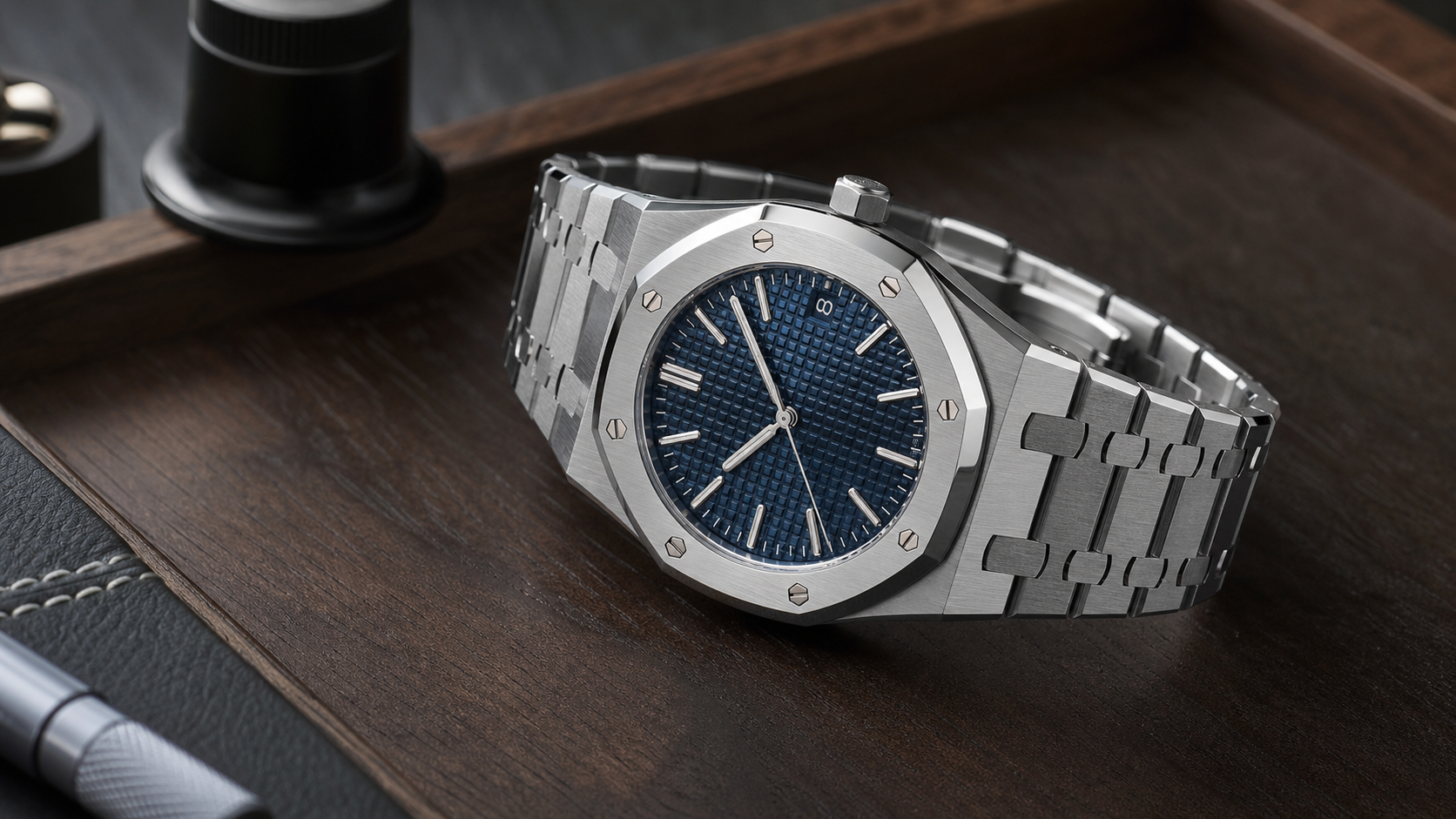
As of mid-2026, the steel Royal Oak Selfwinding 41mm reference 15510ST continues to trade meaningfully above its listed retail price. In Canadian terms, the retail benchmark sits around the mid-$40,000 CAD range before tax, while many clean secondary-market examples trade closer to the low-to-mid $60,000 CAD range. That places many current-production steel examples roughly 40 percent above retail, depending on dial colour, condition, age, completeness, seller reputation, and the exchange rate at the time of purchase.
The Royal Oak Jumbo Extra-Thin, particularly steel references connected to the original 39mm design lineage, tends to command an even stronger premium. The Jumbo is not simply another Royal Oak. For many collectors, it is the purest expression of the original 1972 concept, and that makes it substantially more difficult to replace.
This is the part many new buyers miss. A Royal Oak may technically have a retail price, but for most buyers, retail access is not guaranteed. If the boutique route is closed, the secondary market becomes the real market.
Why the Royal Oak Became More Than a Watch
When Audemars Piguet introduced the Royal Oak in 1972, the idea was radical. A high-end steel sports watch, hand-finished to haute horlogerie standards, priced like a precious-metal dress watch, did not fit the old rules of Swiss watchmaking. That was precisely the point.
Designed by Gerald Genta, the Royal Oak created a design language that collectors still recognize instantly: octagonal bezel, exposed screws, integrated bracelet, angular case, and a textured Tapisserie dial. Audemars Piguet describes the Royal Oak as a model that helped redefine the high-end sports watch category, and that historical position matters because collectors pay premiums for originals, not followers.
The Royal Oak is not valuable only because it is hard to buy. It is valuable because its scarcity is attached to a design that has cultural weight. The watch does not need a large logo to announce itself. The bracelet, bezel, case geometry, and dial texture already do that.
The Scarcity Problem in 2026
Audemars Piguet produces a very small number of watches compared with larger Swiss brands. Exact production figures are not publicly confirmed in the same way across the industry, but AP output is widely understood to be a fraction of Rolex production. More importantly, only a portion of that production is allocated to the Royal Oak, and only a portion of that is steel.
That creates the core imbalance. The Royal Oak is the model many new AP buyers want first, but it is also the model that boutiques have the least incentive to allocate casually. Established clients, long-standing purchase history, regional allocation, and relationship-based retail all affect access.
In practical terms, this means the buyer who wants a steel Royal Oak today may face three choices:
- Wait, with no guarantee of allocation.
- Buy another AP model first and build a boutique relationship.
- Pay the secondary market premium for immediate access.
For many buyers, especially those shopping for a specific dial or a specific year, the third option is the only realistic one. That is where the premium is created.
Why Steel Royal Oaks Still Lead the Market
Steel is the material that made the Royal Oak famous. That may sound obvious now, but in 1972 it was disruptive. The original idea was not simply to make a steel watch. It was to make steel feel precious through design, architecture, and finishing.
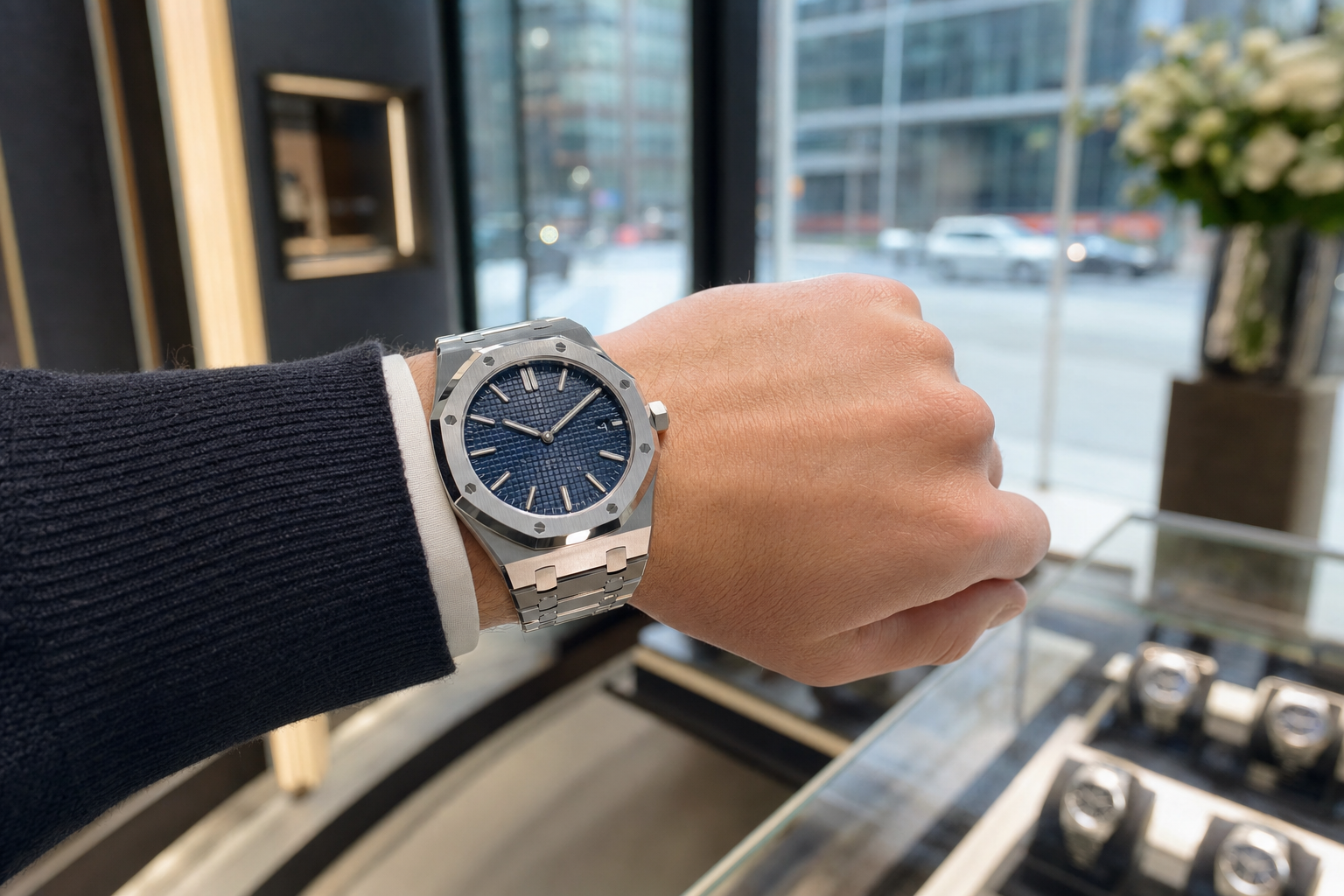
That idea still drives collector behaviour in 2026. Precious-metal Royal Oaks are beautiful, expensive, and often visually impressive, but steel remains the core expression of the model. A steel Royal Oak can be worn with a suit, with a knit sweater, or with a plain T-shirt. It feels sporty without being casual and luxurious without being overly formal.
This versatility is one reason Royal Oak demand has remained more resilient than many trend-driven watches. Buyers may rotate in and out of louder pieces, but the steel Royal Oak continues to occupy a very specific place in a collection: the integrated-bracelet grail that works almost everywhere.
Condition, Polishing, and Full Set Value
The Royal Oak is one of the least forgiving watches when it comes to condition. That is not because it is fragile. It is because the case and bracelet finishing are such a large part of the watch’s value.
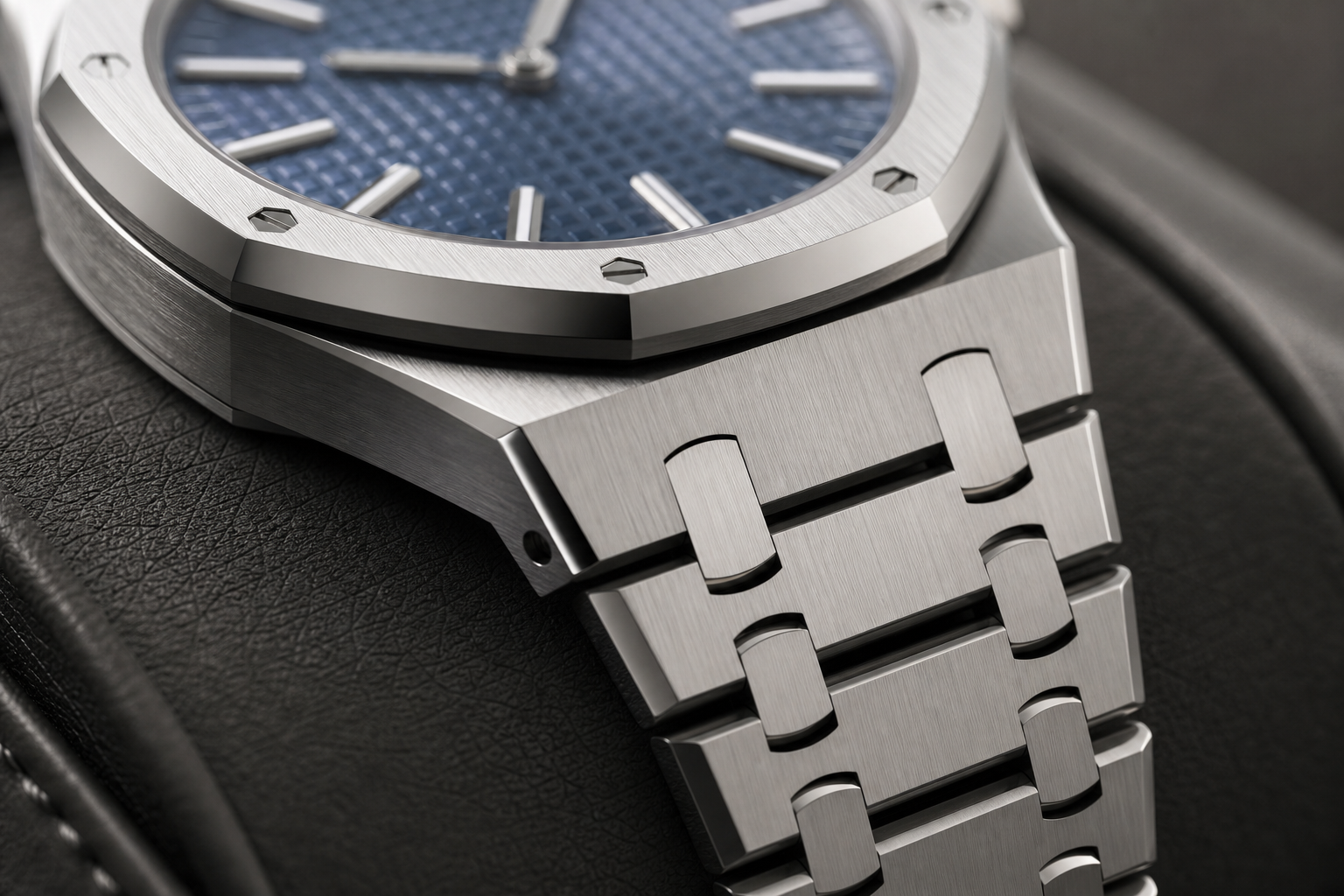
The Royal Oak uses sharp transitions between brushed and polished surfaces. The bevels, edges, bracelet links, bezel, and case planes all need to remain crisp. A watch that has been aggressively polished can lose the tension that makes the design special. Once those lines are softened, they are very difficult to bring back correctly.
This is similar to the collector logic behind our guide on desk diving scratches and why unpolished watches often matter more than perfect-looking ones. Light honest wear is not automatically a problem. Poor polishing can be.
For a Royal Oak, buyers should pay close attention to:
- Case bevel sharpness
- Bezel brushing direction
- Bracelet stretch or looseness
- Dial condition and colour
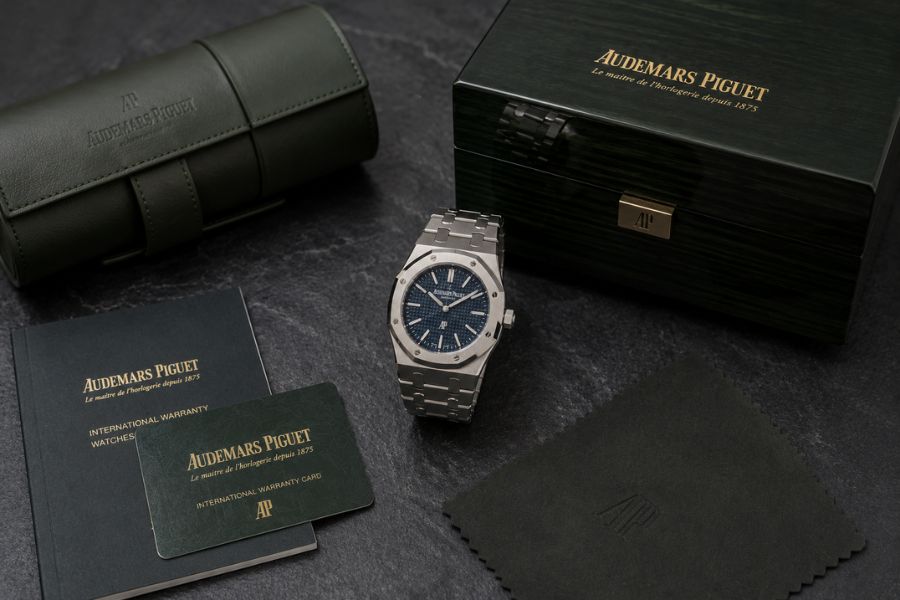
- Matching box, warranty card, booklets, and accessories
- Service history and whether work was performed properly
A complete full set can make a major difference in both liquidity and resale value. At this level, buyers are not only purchasing the watch. They are purchasing confidence, traceability, and future marketability.
If you are preparing to sell a high-value watch, the same principle applies in reverse. Before accepting an offer, review the basics in our before-you-sell guide for first-time luxury watch sellers so you understand how condition, paperwork, and presentation affect the number.
Which Royal Oak References Carry the Strongest Premium
Not every Royal Oak behaves the same way. The word “Royal Oak” covers many references, sizes, complications, metals, and eras. Premiums are strongest where scarcity, recognizability, and collector preference overlap.
| Royal Oak Type | Why It Commands a Premium | Buyer Note |
|---|---|---|
| Jumbo Extra-Thin 39mm | Closest modern connection to the original Royal Oak design language | Often the most collector-driven steel Royal Oak category |
| Self-winding 41mm Steel | Modern daily-wear Royal Oak with strong demand and more trading activity | Dial colour and condition can meaningfully affect price |
| Blue Dial Steel References | Most recognizable configuration and typically the most desired | Expect stronger competition for clean full sets |
| Discontinued References | Finite supply creates collector urgency when the model is desirable | Originality becomes especially important |
| Anniversary-Year Examples | Specific production-year details can create additional collector interest | Documentation matters when proving the watch’s exact configuration |
The broad rule is simple: the more a reference feels connected to the original Royal Oak identity, the stronger its premium tends to be. Complications and precious metals can be valuable, but the core steel Royal Oak remains the emotional centre of the market.
The Premium Has Corrected, But It Has Not Disappeared
One of the most important things to say honestly is that the Royal Oak market is not the same as it was at the peak. Many luxury watches saw extraordinary price growth during the pandemic-era collecting boom, followed by a correction as supply normalized, speculative buyers left, and interest rates changed the broader luxury asset market.
That correction was healthy. It separated short-term hype from durable demand. The Royal Oak did not escape the correction, but the best steel references did what true collector watches tend to do: they settled at lower, more rational levels while still holding a meaningful premium over retail.
That is a very different story than a watch that only traded high because social media attention temporarily pushed it there. The Royal Oak had market strength before the boom and still has market strength after it.
The Toronto Buyer Perspective
For Canadian buyers, the Royal Oak premium has another layer: currency, import exposure, local availability, and tax treatment all affect the final number. A watch that looks fairly priced internationally can land materially higher once taxes, shipping, duty considerations, or dealer spread are factored in. That is why Canadian buyers should always think in terms of the realistic all-in Canadian number before deciding whether the premium makes sense.
Toronto buyers also tend to care about liquidity. If you are buying a Royal Oak as a long-term personal watch, the premium may be acceptable because you are paying for access, enjoyment, and ownership of a blue-chip design. If you are buying with resale in mind, the entry price matters much more.
This is where working with an experienced local dealer helps. A clean Royal Oak with the right configuration can be highly liquid, but overpaying for a weak example can erase much of the advantage. As with any major watch purchase, the goal is not only to buy the reference. The goal is to buy the right example of the reference.
If you are considering an exit, a trade, or a market check, Toronto Watch Exchange can help evaluate current demand through our sell your watch service. For broader strategy, our guide on how to safely flip luxury watches explains why timing, spread, and condition matter just as much as brand name.
So Why Does the Royal Oak Still Command a Premium in 2026?
The Royal Oak still commands a premium because the demand is not based on one factor. It is supported by several forces working together:
- It is a historically important Gerald Genta design.
- It created the modern luxury steel sports watch category.
- Steel Royal Oak supply remains limited relative to global demand.
- Boutique access is difficult for first-time buyers.
- The integrated bracelet and case finishing are expensive, recognizable, and hard to replicate properly.
- Blue-chip references remain liquid in the pre-owned market.
- Clean, unpolished, full-set examples are not as common as buyers think.
In other words, the Royal Oak premium is not only a hype premium. It is an access premium, a design premium, a finishing premium, and a collector-confidence premium all at once.
The TWX Verdict
The Audemars Piguet Royal Oak is not immune to market cycles. No watch is. But in 2026, the Royal Oak remains one of the clearest examples of a luxury watch where the secondary market still assigns real value above retail.
For buyers, that means patience and discipline matter. Do not chase the cheapest example without understanding why it is cheaper. Do not assume every Royal Oak holds value equally. Focus on reference, dial, condition, completeness, and whether the watch has been polished. For sellers, understand that clean full-set Royal Oaks remain highly desirable, but pricing must reflect the current market rather than the peak market.
The Royal Oak still commands a premium because it has earned a place that very few watches ever reach. It is recognizable, scarce, wearable, historically important, and deeply tied to the collector imagination. That combination is difficult to manufacture, and even harder to replace.