
Owning a Rolex means more than just buying a timepiece, it means wearing a piece of history, engineering prowess, and fine craftsmanship. However, even the most accurate Rolex can stop without warning. It can be concerning when a beloved used Datejust or a brand-new model, such as the Rolex Sky-Dweller 2025 release, comes to an abrupt stop. Knowing why your Rolex stopped working, how to fix it, and when to get expert assistance will guarantee that your watch keeps working dependably. According to recent data, if maintenance schedules are not followed, mechanical watches, including Rolex watches, are more likely to stop working within the first ten years.
Every year, we at Toronto Watch Exchange work with hundreds of Rolex owners throughout the Greater Toronto Area. Many people bring in watches they think are broken, only to find that the issue was a minor handling error or a simple power outage. This thorough guide explains the most typical causes of a Rolex’s malfunctions.
Common Reasons Your Rolex Stopped Working
Rolex watches are known for durability, but several factors can interrupt their performance. Knowing these will help you diagnose problems and prevent long-term damage.
Your Rolex Ran Out of Power
Because Rolex watches are automatic, their mainspring is wound and energy is stored by the natural motion of your wrist. The majority of contemporary Rolex timepieces, such as the GMT-Master II, Oyster Perpetual, and Submariner, have a 48–72 hour power reserve. When this reserve is exhausted, your watch will stop if you haven’t worn it in a few days. This is not an indication of a malfunction and is entirely normal.
Unscrew the crown and manually wind it 30 to 40 full turns clockwise to verify that this is the problem. When the mainspring is fully wound, there should be a little resistance. The issue was just a lack of power, if the watch starts to tick again.
However, if your Rolex stops within 24 to 48 hours of regular wear, the power reserve may be compromised. This often occurs in older or pre-owned Rolex watches that have not been serviced in over 10 years. Degraded lubricants or a weakened mainspring can reduce energy retention, requiring a full movement service.
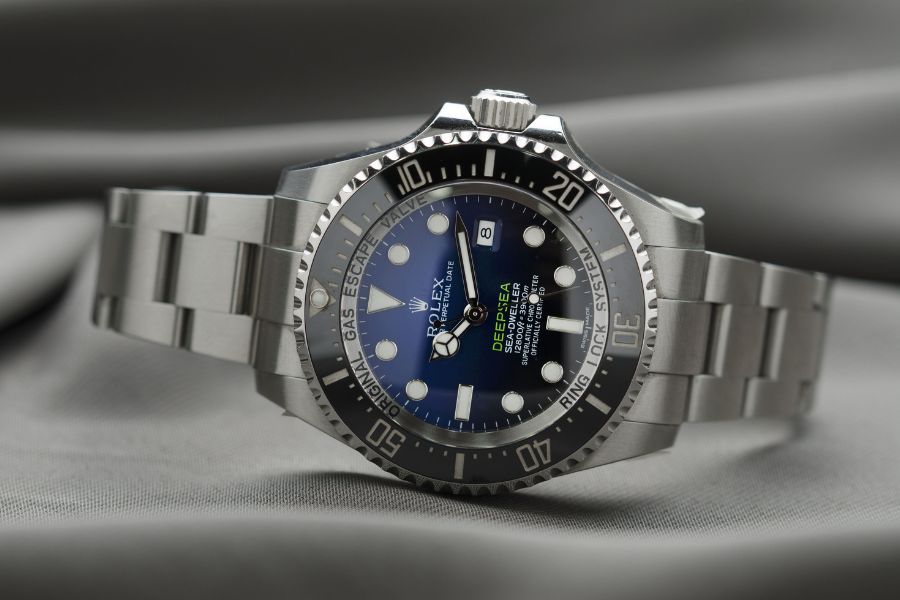
The Date Mechanism Is Stuck or Misaligned
Particularly susceptible to stoppages brought on by incorrect date adjustment are models with date complications, such as the Datejust, Day-Date, and Sky-Dweller. Between 9:00 PM and 3:00 AM, when the date mechanism is actively changing, there is a “danger zone” on Rolex movements. The date wheel may become jammed if you try to change the date during this window, which could stop the movement altogether.
Don’t force the crown if your Rolex stops after you’ve attempted to change the date. Rather, try to reset the date after moving the time forward past 3:00 AM. Internal gears may already be damaged if the crown skips, feels stiff, or does not engage smoothly.
Sky-Dweller owners should take extra caution. This model features an annual calendar with a complex month wheel system. Incorrect manipulation can misalign multiple components, leading to complete stoppage. In such cases, professional intervention is essential.
Movement Malfunctions Leading to Your Rolex Being Stopped
Even the most robust Rolex movements can be affected by external factors. Three common causes of stoppage or erratic timekeeping include:
- Magnetization: Exposure to magnetic fields from laptops, smartphones, speakers, or medical equipment can cause the balance spring to stick, leading to significant time gain or complete stoppage.
- Mechanical shock: Dropping your watch or striking it against a hard surface can misalign the balance wheel, escapement, or gear train.
- Lubrication breakdown: Over time, the synthetic oils inside the movement dry out or thicken, increasing friction and reducing efficiency. This is especially common in watches older than 7 to 10 years.
Irregular ticking, sporadic operation, or timekeeping errors exceeding plus or minus 5 seconds per day are indicators that your movement needs attention. Although the COSC-certified movements from Rolex are rated for -2 to +2 seconds per day, any deviations from that range frequently point to internal problems.
Home demagnetizers are available, but using them incorrectly can do more damage. A timegrapher can be used by a certified watchmaker to evaluate amplitude, beat error, and rate stability in order to make an accurate diagnosis. If you’re looking to purchase a Rolex abroad, knowing the countries where you can buy a Rolex can help you avoid counterfeit watches and hidden import costs.
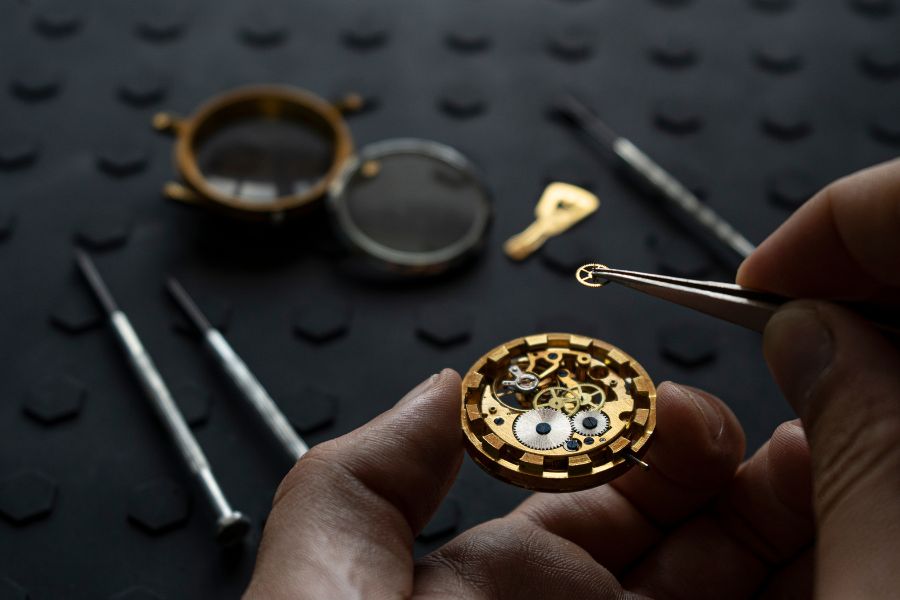
DIY Checks When Your Rolex is Stopped
Before scheduling a service appointment, try these safe, non-invasive steps:
- Manually wind the crown 30 to 40 times to rule out power reserve depletion.
- Ensure the crown is fully screwed down to maintain water resistance.
- Inspect the crystal for fogging or condensation, this indicates a compromised seal and requires immediate service.
- Listen for unusual sounds: grinding, clicking, or complete silence may signal internal damage.
- Avoid using household tools, cleaning chemicals, or unregulated watch winders, as these can cause irreversible harm.
When Your Timepiece Needs Professional Service
Certain issues cannot be resolved at home and require the expertise of a trained professional. Seek service immediately if:
- The watch does not restart after manual winding
- The date or chronograph functions remain stuck despite correct handling
- You observe moisture under the crystal
- Daily timekeeping error exceeds 10 seconds
- You hear abnormal noises from the movement
Model-specific concerns also warrant professional attention:
- Rolex Daytona: Chronograph pushers that stick or fail to reset often indicate gear misalignment in the column wheel mechanism.
- GMT-Master II: If the independent 24-hour hand does not respond to crown adjustments, the movement may need recalibration.
- Used Rolexes: Always verify service history. Many watches sold as “working” have hidden wear that can lead to sudden failure.
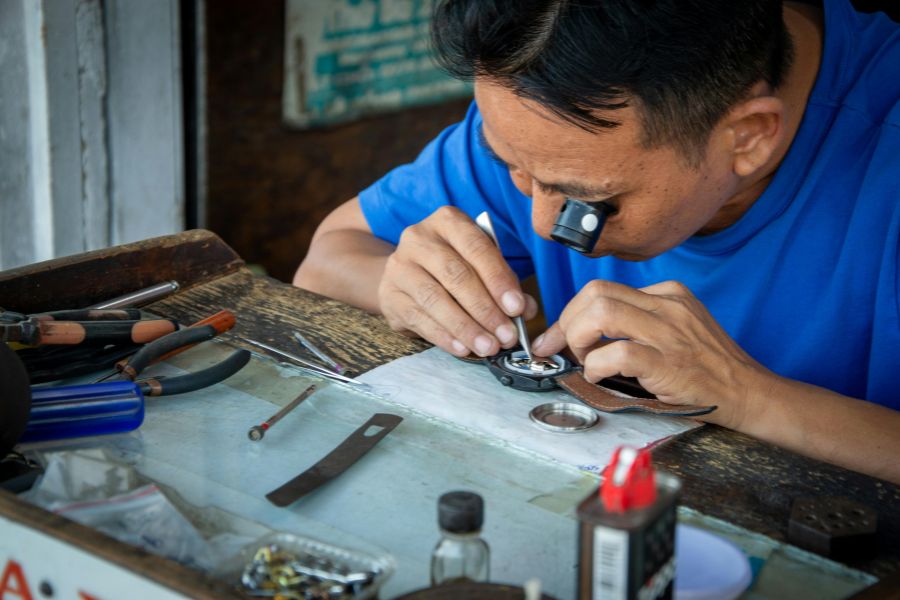
Troubleshooting Tips to Know: Why Your Rolex Stopped
Issue |
Possible Cause |
Recommended Action |
| Watch stopped | Depleted power reserve | Manual wind 30–40 turns |
| Watch stopped | Movement malfunction | Visit a certified Rolex watchmaker |
| Date not changing | Misaligned date wheel | Adjust outside 9 PM–3 AM; seek service if it persists |
| Timekeeping error | Magnetization, lubrication issues | Professional demagnetization or service |
| Moisture under the crystal | Compromised crown or seal | Immediate professional service |
| Chronograph malfunction | Daytona/complex module issue | Certified service recommended |
Understanding Rolex Servicing Costs in Toronto
A full Rolex service involves complete disassembly, ultrasonic cleaning, replacement of worn components (including gaskets and springs), re-lubrication with manufacturer-approved oils, precision timing, and water resistance testing.
In the Greater Toronto Area, typical service costs in 2025 are:
- Standard models (Datejust, Submariner, Explorer): $800 to $1,200 CAD
- Complicated models (Sky-Dweller, Daytona, Yacht-Master II): $1,200 to $1,800+ CAD
- Pre-owned watches with unknown service history may incur additional diagnostic or parts fees
Maintaining detailed service records not only preserves your warranty but also significantly enhances resale value.
How To Maintain A Luxury Watch
The best defense against unplanned stoppages is routine maintenance. Adhere to these recommended practices:
- Wear your watch frequently, or if you plan to keep it for a long time, use a good automatic watch winder.
- Keep it away from harsh chemicals, high temperatures, and powerful magnetic sources.
- While maintaining your Rolex is essential, knowing how to clean a watch is equally important to prevent unnecessary wear and preserve resale value.
- Every week, use a gentle microfiber cloth and some mild soapy water to clean the bracelet and case.
- Keep dry and cool, preferably in a special watch box.
- Even if the watch seems to be operating flawlessly, schedule a complete service every seven to ten years.
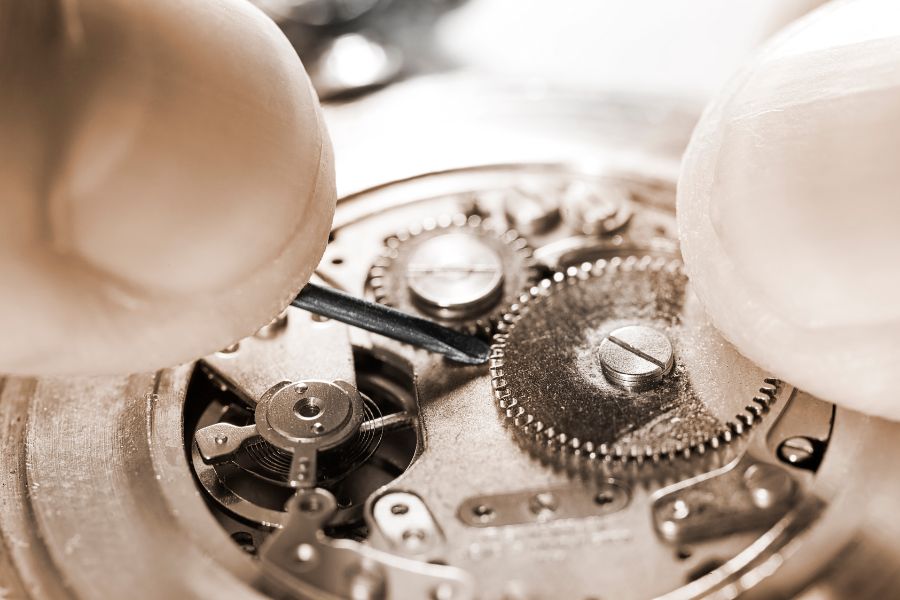
Your Rolex Deserves Expert Care
A stopped Rolex is rarely a catastrophic malfunction. It usually acts as a reminder that even the finest timepieces need to be maintained. Knowing the common causes of stoppage, power outages, date problems, magnetization, or normal wear will help you respond quickly and appropriately.
If you’re in Toronto or the Greater Toronto Area and would like a second opinion on any of the Rolex models, Toronto Watch Exchange offers free preliminary diagnostics. Whether you are buying, selling, or maintaining your watch, our staff provides informed guidance based on decades of experience.
Frequently Asked Questions About Rolex Stoppages
Why does my Rolex stop when I take it off at night?
Motion is necessary for automatic watches to produce power. Your Rolex may have a lower power reserve as a result of age or neglect if it stops working after one night. Before wearing, try winding it by hand.
Can I fix a stuck date on my Rolex Datejust myself?
Only if there is no opposition when you change the date outside of the 9 PM to 3 AM window. Internal gears may be broken if the mechanism is actually jammed and forced. It is highly advised to seek professional assistance.
How do I verify the authenticity of a used Rolex?
Verify that the movement has the appropriate Rolex markings, examine the quality of the cyclops magnification, and look for the reference and serial numbers engraved between the lugs. Have it verified by a reputable vendor, such as Toronto Watch Exchange, for peace of mind.
Do newer Rolex models stop less often?
Yes. Rolex’s 2024 and 2025 models feature improved Paraflex shock absorbers, longer-lasting lubricants, and enhanced mainspring efficiency. However, they remain mechanical instruments and still require periodic maintenance.