
When you inherit a Rolex among a loved one’s possessions, it can cause a number of emotions, such as pride, nostalgia, confusion, and even guilt. It represents their achievement, style, and personality, and is beyond a timepiece. But there are a number of pressing practical concerns: Is it real? How much is it worth? If I sell it, do I still have to pay taxes? More importantly, what should I do with it?
We at Toronto Watch Exchange have worked with hundreds of families who have inherited high-end timepieces throughout Ontario. Many people show up not knowing where to begin. This guide breaks through all the noise with simple, precise, and sensitive insight, so you can make a choice that respects your loved one and fits your life currently.
Understanding the True Nature of an Inherited Rolex
First of all, it’s important to understand that an inherited Rolex is rarely simply “a watch.” It could be a delicate Lady-Datejust handed down through the generations, a Submariner your father purchased after his first significant promotion, or a Datejust your grandfather wore to work every day for thirty years. Financial decisions are frequently complicated by the emotional weight of the stories these pieces carry.
However, every Rolex, whether it is modern or vintage, functional or not, has quantifiable value from a market perspective. Knowing what motivates that value and how it relates to your circumstances in Canada is crucial.
How to Identify and Authenticate Your Inherited Rolex
Even without paperwork, you can gather critical information by examining the watch itself. Every genuine Rolex has two engraved identifiers: the reference number and the serial number.
The reference number defines the model, like 126610LN for a modern black Submariner Date or 279174 for a two-tone Lady-Datejust 31mm. It’s etched between the lugs at 12 o’clock, under the bracelet. The serial number, unique to each watch, sits between the lugs at 6 o’clock on older models or is laser-etched on the inner bezel (visible through the crystal) on watches made after 2010.
These numbers let experts pinpoint the exact model, production era, and original specifications. If the bracelet has been replaced or the dial refinished, that affects value, but not necessarily authenticity.
Common Rolex Models Found in Canadian Estates
Model |
Typical Era Inherited |
Current Market Range (CAD) |
Notes |
|---|---|---|---|
| Rolex Datejust (36mm or 31mm) | 1970s–2000s | $7,000–$14,000 | Most common inherited model. Two-tone versions especially popular in Ontario estates. |
| Rolex Submariner (No Date or Date) | 1980s–2010s | $13,000–$22,000 | High demand. Even unpolished or non-running examples retain strong value. |
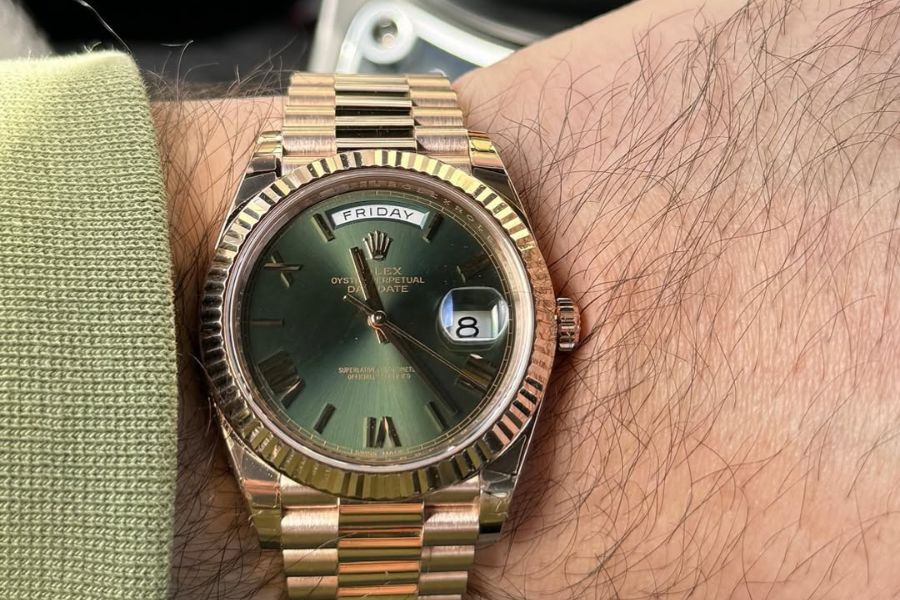
| Rolex Day-Date “President” | 1960s–1990s | $18,000–$40,000+ | Often in yellow or white gold. Full sets command premium prices. |
| Rolex Oyster Perpetual (36mm or smaller) | 1950s–2000s | $5,000–$10,000 | Simple design but growing in collector interest, especially vintage dials. |
If you’re unsure what you have, take clear photos of the dial, case back, and numbers. We can often identify it from images alone.
Canadian Tax and Legal Considerations for Inherited Watches
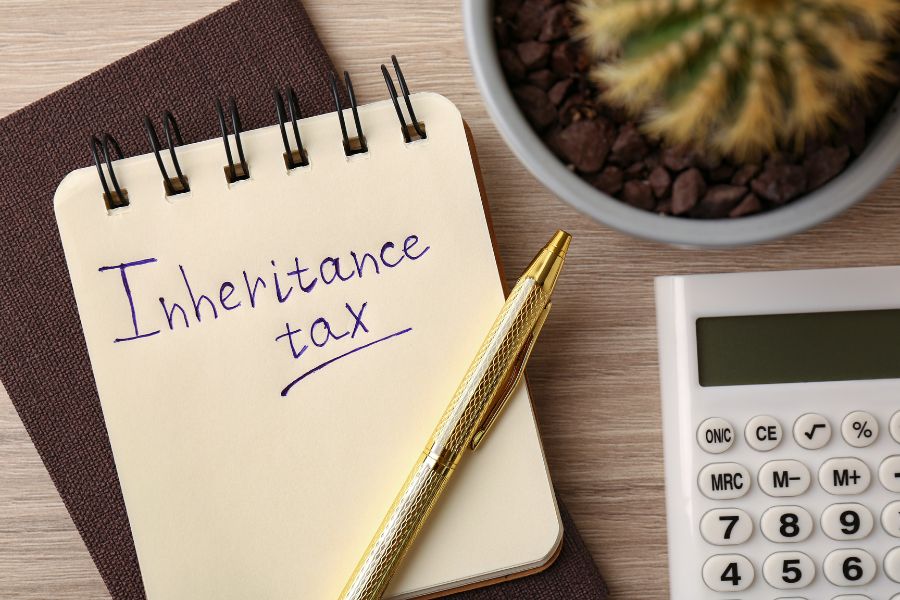
One of the biggest misconceptions is that inheriting a luxury watch triggers a tax bill. It does not. Under Canada Revenue Agency rules, receiving property through inheritance is not a taxable event.
However, if you later sell the watch, capital gains rules may apply. The CRA classifies luxury watches as “personal-use property.” Here’s how it works in practice:
- The watch’s cost base for tax purposes is its fair market value on the date of death, not what the original owner paid.
- If you sell it for more than $1,000 and above that inherited value, 50% of the gain is taxable as capital gains income.
- If you sell it for less than or equal to its value at inheritance, no tax is owed.
For example, if a Submariner was worth $15,000 when your parent passed in 2023 and you sell it in 2025 for $16,500, the $1,500 gain is below the $1,000 threshold, so no tax. But if a rare Daytona appreciated from $30,000 to $48,000, the $18,000 gain would trigger a $9,000 taxable amount.
Tax Scenarios for Inherited Rolexes in Ontario
| Watch Type | Inherited Value (2023) | Sale Price (2025) | Taxable Gain? | CRA Reporting Needed? |
|---|---|---|---|---|
| Datejust 36mm (steel) | $8,500 | $9,000 | No (gain under $1,000) | No |
| Daytona 116500LN | $28,000 | $36,000 | Yes ($8,000 gain → $4,000 taxable) | Yes (report on Schedule 3) |
| Submariner 16610 | $14,000 | $14,000 | No (no gain) | No |
In Ontario, if the total estate exceeds $50,000, the watch should be listed on the Estate Information Return filed with the Ministry of Finance. A professional appraisal supports accurate reporting and avoids delays.
Market Realities: What Your Inherited Rolex Is Worth
Value is more than just the model. What a buyer in Canada will pay today depends on a number of factors, including condition, originality, service history, and current demand. Even if the reference is the same, a watch with extensive polishing, replaced parts, or a refinished dial may sell for 30 to 50 percent less than an unaltered example.
Inherited pieces frequently have missing boxes and papers. They don’t completely remove resale value, but they do lower it (usually by 15–30%). Particularly for vintage models, many collectors value originality over documentation.

Key Value Factors for Rolexes
| Factor | High Value Impact | Low or Negative Impact |
|---|---|---|
| Original Dial & Hands | Factory-original, unrefinished dial with correct font and lume | Refinished dial, incorrect hands, or “service replacement” parts |
| Case Condition | Light wear, sharp lugs, no over-polishing | Rounded lugs, deep scratches, or altered case shape |
| Bracelet | Original bracelet with correct clasp and links | Aftermarket strap, mismatched links, or stretched bracelet |
| Functionality | Running accurately, recently serviced | Non-working (but still valuable if rare) |
A non-running Rolex isn’t worthless. In fact, many buyers purchase them for restoration. A rare reference like a Paul Newman Daytona or a tropical-dial Submariner may be more valuable untouched than “fixed.”
What to Do If the Inherited Rolex Is Lost or Stolen Before Appraisal
It’s more common than you might think to lose a Rolex while sorting through an estate, particularly if the watch was kept in an old jewelry case, safety deposit box, or other personal belongings. Take immediate action if you think it’s missing. First, submit a police report to your local Ontario detachment or the Toronto Police Service. Provide as much information as you can, including the reference number, any engravings, photos, and serial number, if available.
Next, notify your home insurer or the estate’s executor. While standard home insurance rarely covers full market value, some policies include “unscheduled personal property” coverage that may apply if the watch was in your residence. For higher-value timepieces, insurers like Chubb or Huntington T. Block offer specialized claims support. If your inherited Rolex has already gone missing or was stolen before you could secure it, our complete guide on what to do when your Rolex is stolen walks you through reporting it, working with the police, and protecting yourself from resale fraud.
Inherited Watches from Outside Canada: Import Rules and Appraisal Challenges
It’s not uncommon for Ontarians to inherit a Rolex from a relative in the U.S., Europe, or Asia. If the watch is already in your possession, no import duties apply, personal bequests are exempt under Canada Border Services Agency (CBSA) guidelines. However, if you’re shipping it to Canada, you must declare it as an inherited item (not a purchase) to avoid GST/HST.
Keep any documentation that proves it’s part of an estate: a will excerpt, death certificate, or executor letter. While CBSA rarely taxes inherited goods, they may request proof to confirm it’s not a commercial import.
Making the Right Choice: Keep, Sell, or Pass It On
This decision is deeply personal. Ask yourself:
- Do I wear watches like this, or will it sit in a drawer?
- Does it connect me to my loved one in a way I want to preserve?
- Would the proceeds help my family more than keeping it?
- Is there another relative who might cherish it more?
There’s no shame in selling. Many families use the proceeds to fund education, pay off debt, or donate to a cause the deceased cared about. Others keep the watch but insure it, something standard home insurance rarely covers.
Selling Your Inherited Rolex Safely in Ontario
If you decide to sell, stay away from unreliable internet purchasers. Scammers and lowballers abound on eBay, Kijiji, and Facebook Marketplace. Auction houses charge 15–25% in fees and take months to complete.
Clear terms are a game-changer and are provided every time here at Toronto Watch Exchange. We specialize in inherited timepieces and have been serving families in Ontario for years. We offer fair market value based on current Canadian demand rather than retail nostalgia, whether it’s a Patek Philippe, Omega, or Rolex.
Make sure the buyer gives you a written offer, explains how they calculate value, and doesn’t put any pressure on you before you sell your inherited watch. And if you’re curious how certain models perform over time, we can help with any analysis of Rolexes that hold or increase in value can help you understand long-term worth, even if you decide to keep it.
Honouring the Legacy Behind the Watch
There is more to an inherited Rolex than just movement and metal. It is a piece of a person’s life. Your decision is important, regardless of whether you keep it on your wrist, pass it on to the following generation, or use it to provide your family with significant support.
At Toronto Watch Exchange, we treat every inherited watch with the respect it deserves. We are stewards of legacy, not merely purchasers. For an upfront, no-obligation appraisal, come see us in Toronto if you’re prepared to learn more. We’ll give you the information, the background, and the freedom to make your own decisions.