
There is a specific, stomach-dropping sound that every modern luxury watch owner knows too well. It is the harsh scrape of metal sliding across a MacBook palm rest. When you invest a significant amount of money into a pristine luxury timepiece, discovering your first set of desk diving scratches on the clasp can induce a moment of pure panic.
Every single day at Toronto Watch Exchange, clients ask us how to remove these microscopic blemishes from their Rolex watches. Whether you are typing on an aluminum laptop, sliding your wrist across an office desk, or simply living your daily life, the bottom of your watch bracelet takes the vast majority of daily abuse. However, before you reach for a polishing cloth, you need to understand the horological reality of these marks.
In this comprehensive guide, we will break down the science behind desk diving scratches, explain the crucial differences between brushed and polished Rolex clasps, and reveal why the hardcore collector community actually prefers a scratched watch over a polished one.
Table of Contents: Navigating Clasp Scuffs
What Are Desk Diving Scratches And Why Do They Happen
In the watch community, the term “desk diving” is a playful phrase used to describe the micro-abrasions that occur from working in a standard office environment, rather than utilizing the watch for its intended extreme purpose, such as deep-sea diving. But why do these specific scratches happen so easily on a watch designed to survive the harshest conditions on earth?
The Metallurgy 904L: Oystersteel Versus Anodized Aluminum
Many collectors mistakenly believe that because Rolex uses proprietary 904L Oystersteel, the watch is completely invincible. While 904L steel is incredibly resistant to chemical corrosion and harsh environments, making it perfect for extreme moisture exposure, as discussed in our comprehensive guide to watch water resistance ratings, the metal is actually relatively soft on the surface layer.
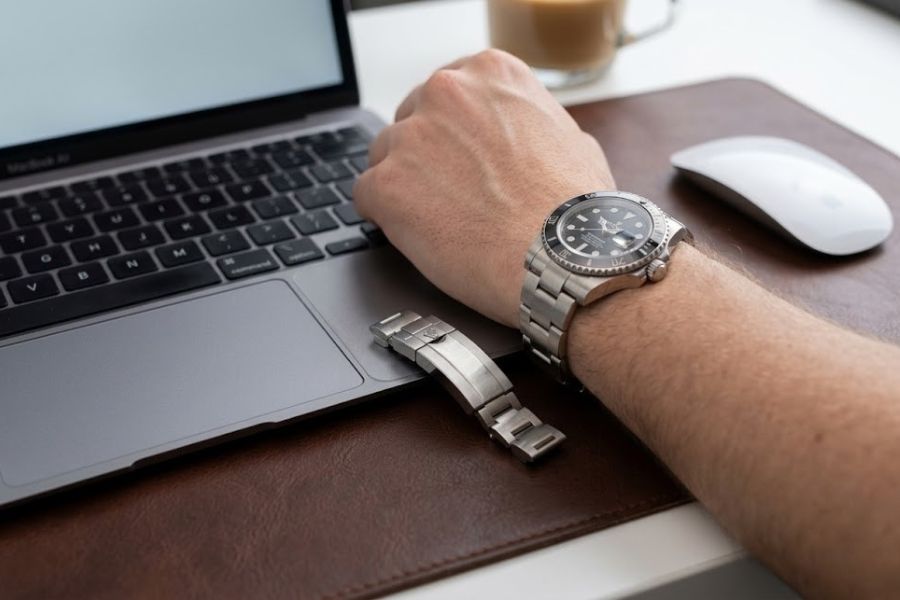
The modern office worker’s absolute worst enemy is the Apple MacBook. MacBooks and similar premium laptops are constructed from anodized aluminum. The anodization process creates an aluminum oxide layer that ranks significantly higher on the Mohs scale of mineral hardness than 904L stainless steel. Therefore, when your Rolex clasp drags across the edge of your laptop, the laptop wins the friction battle every single time. This results in a distinct, bright scratch on the clasp.
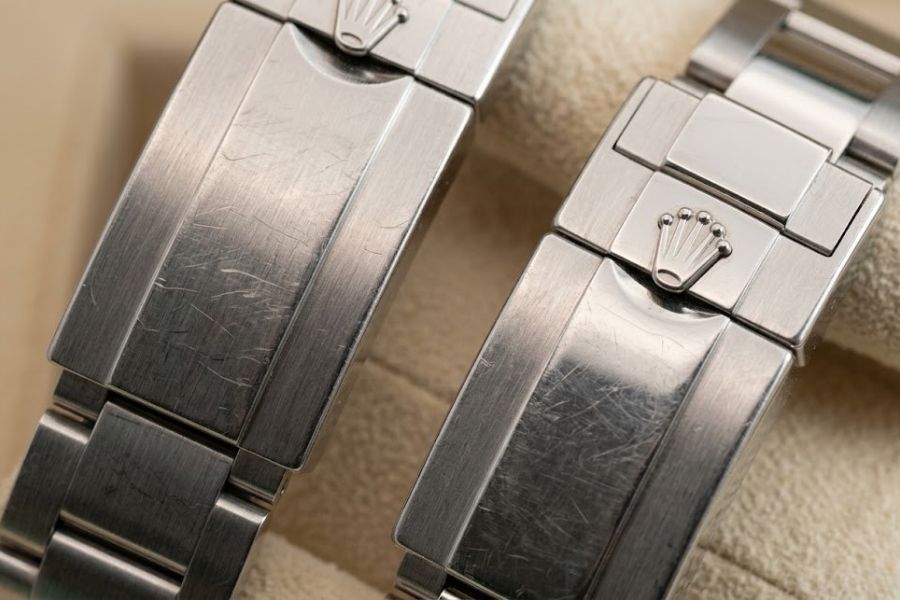
Common Impact Zones On Your Rolex Bracelet
Desk diving does not affect the entire watch evenly. The damage is usually concentrated in very specific areas based on how human wrists rest on flat surfaces.
- The Clasp Center: The largest, flattest surface area that makes direct contact with desks and laptops.
- The Fliplock Safety Catch: The protruding raised edge on Submariner and GMT-Master clasps that catches on edges.
- The Lower Oyster Links: The two links directly attached to the bottom of the clasp often drag along the desk when using a computer mouse.
The Anatomy of a Scratch-Brushed Versus Polished Clasps
Not all desk diving scratches are created equal. How the scratch appears on your watch depends entirely on the specific Rolex model you are wearing and how the Swiss factory finished the metal.
| Rolex Model Category | Clasp Finish Type | How Scratches Appear | Long-Term Wearability |
|---|---|---|---|
| Submariner, Explorer, Sea-Dweller | Fully Brushed Oystersteel | Scratches appear as bright silver lines that break the unidirectional factory grain. | Excellent- Over time, the scratches blend together to form an even, dull patina that collectors love. |
| GMT-Master II, Daytona, Yacht-Master | Polished Center Links (PCLs) | Scratches appear as cloudy, highly visible scuffs on the mirror-like finish. | High-Maintenance- PCLs are notorious scratch magnets. Even resting the clasp on a soft desk pad can cause micro-swirls. |
| Day-Date (President), Datejust (Jubilee) | Concealed Crownclasp / Small Clasp | Minimal surface area means fewer visible scratches, but the softer precious metal links can dent easily. | Moderate- Gold is softer than steel, so hard impacts cause deeper dings rather than light surface scratches. |
Why You Should Never DIY Polish Your Watch
When you spot your first scratch, the immediate temptation is to search YouTube or Reddit for a quick fix. You will find hundreds of forum threads recommending DIY hacks to remove the damage. As the authentication experts at Toronto Watch Exchange, we have a firm warning. You must never attempt to polish your luxury watch at home.
The Scotch-Brite Sponge Myth
A highly prevalent internet myth suggests using a green Scotch-Brite kitchen sponge to brush out scratches on a Submariner clasp. While dragging an abrasive sponge across the metal will indeed remove the scratch, it does so by physically stripping away a layer of the steel. Worse, human hands cannot replicate the perfectly straight, machine-applied factory grain. The result is a wavy, uneven finish that instantly flags the watch as tampered with to any professional dealer or appraiser.
Cape Cod Cloths and Rounded Bevels
For polished clasps like those found on the Daytona, people often use Cape Cod polishing cloths. The chemical abrasives in these cloths remove micro-scratches by smearing the metal. If you rub too hard or too often, you will physically round off the sharp, crisp bevels that Rolex meticulously machined into the clasp edge. For authoritative insights on why maintaining sharp case lines is vital to collector value, we highly recommend reading Hodinkee’s editorial guides on unpolished vintage watches.
Proper Maintenance Over Polishing
Instead of trying to polish away the metal, you should focus on safe, non-destructive maintenance. Keeping the bracelet free of dirt and grime prevents premature stretching. You can learn the exact, safe methods for this in our comprehensive tutorial on how to clean your luxury watch.
Three Proven Ways to Prevent Desk Diving Scratches
If you cannot stand the thought of marking up your pristine clasp, proactive prevention is your only viable strategy. Here are the three methods our TWX clients use to protect their timepieces in the office.
| Prevention Method | How It Works | Effectiveness Rating |
|---|---|---|
| Leather Desk Mats | Covers the hard, abrasive surface of your wooden or glass desk with soft leather or felt. | High for general desk work, but does not protect against laptop edges. |
| Laptop Palm Rest Skins | Applying a clear, matte vinyl skin directly to the anodized aluminum of your MacBook. | Extremely High for typing, completely neutralizes the metal-on-metal friction. |
| Clasp Protective Films | Applying a transparent 3M sticker directly to the Rolex clasp itself. | Perfect protection, but purists dislike the tactile feel of the plastic sticker. |
The Classic: Take It Off Routine
Beyond the accessories listed above, many hardcore collectors simply unbuckle their watches and place them safely on a microfiber cloth or dedicated watch stand while answering long emails. It is the absolute most foolproof way to guarantee zero damage during a long workday.
The TWX Verdict: Why Unpolished is Always Better
If you take anything away from this guide, let it be this core philosophy. You must learn to embrace the scratch.
In the high-end luxury watch market, experienced collectors subscribe to the Japanese philosophy of Wabi-Sabi, finding beauty in the natural wear and aging of an object. The scratches on your clasp are the memory marks of you actually wearing, traveling with, and enjoying your timepiece. Furthermore, major Swiss brands explicitly state on the official Rolex care and service page that a watch requires specific, specialized tools to be refinished properly by a certified watchmaker.
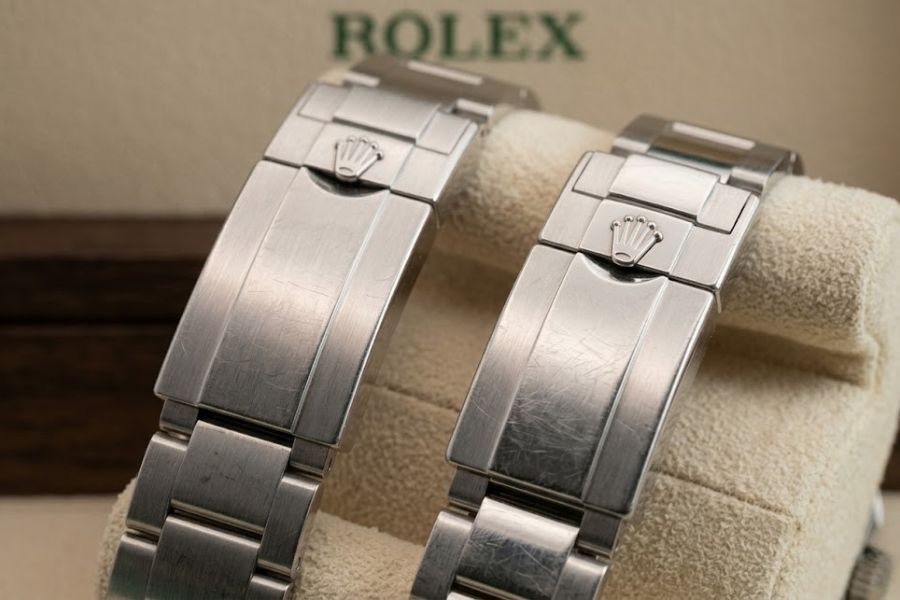
The Impact On Resale Value
More importantly, this is a financial reality. When you decide to upgrade your collection and sell your timepiece to Toronto Watch Exchange, a watch with a scratched, completely unpolished factory clasp will always command a higher cash offer than a watch that has been aggressively polished by an amateur to look artificially new. Protect the original factory lines, ignore the desk diving scratches, and wear your luxury watch with absolute pride.
Frequently Asked Questions About Rolex Scratches
We see thousands of watches cross our evaluation desks in Toronto. Here are the most common questions we receive regarding daily wear and tear.
Does a scratched clasp lower the value of my Rolex?
Normal surface scuffs and desk diving scratches do not significantly impact the value of a modern Rolex. Severe gouges or deep metal dents will lower the condition grade, but professional dealers always prefer honest daily wear over a bad, localized polishing job.
Will the official Rolex Service Center polish my watch?
Yes. If you send your watch to an official Rolex Service Center (RSC) for a routine ten-year movement overhaul, they will expertly polish and re-brush the clasp and case using factory machines, returning it to like-new condition. However, you can explicitly request them to leave the watch unpolished if you prefer to retain the character and original metal thickness.
Are protective clasp stickers a good idea?
Brands sell clear 3M vinyl stickers custom-cut to perfectly cover Rolex clasps. While they absolutely prevent scratches, many purists dislike them because they can peel at the edges over time, collect dirt, and detract from the luxurious, cold feel of the metal. Ultimately, applying protective film is a personal preference.
Do scratches show up more on gold or stainless steel?
Gold is a significantly softer metal than stainless steel. Therefore, 18k yellow, white, and Everose gold clasps will accumulate scratches and deeper dings much faster than 904L Oystersteel. However, because of how light reflects, scratches tend to blend into gold’s warm luster slightly better than they do on the stark mirror finish of polished steel links.