
In This Article
At the upper end of the watch market, two names consistently come up when collectors talk about pieces that hold value: Patek Philippe and Audemars Piguet. If you are considering either brand through luxury watch dealers in Toronto, understanding the differences between them determines what you pay, what you get, and what you can sell for later. This comparison cuts through the brand mythology and looks at what the numbers and the market actually show.
Two Different Approaches to Watchmaking
Patek Philippe and Audemars Piguet are both independent Swiss manufacturers with centuries of history, but they represent entirely different design philosophies. Understanding those philosophies helps explain their current market behavior.
Patek Philippe, founded in Geneva in 1839, is defined by heritage, restraint, and technical complexity. Their most famous models, the Calatrava, the Nautilus, and the Aquanaut, are identifiable by their mechanical refinement rather than their ostentation. Patek has historically produced fewer pieces per year than most of its competitors and has never publicly shared exact production numbers. Scarcity is structural, not manufactured.
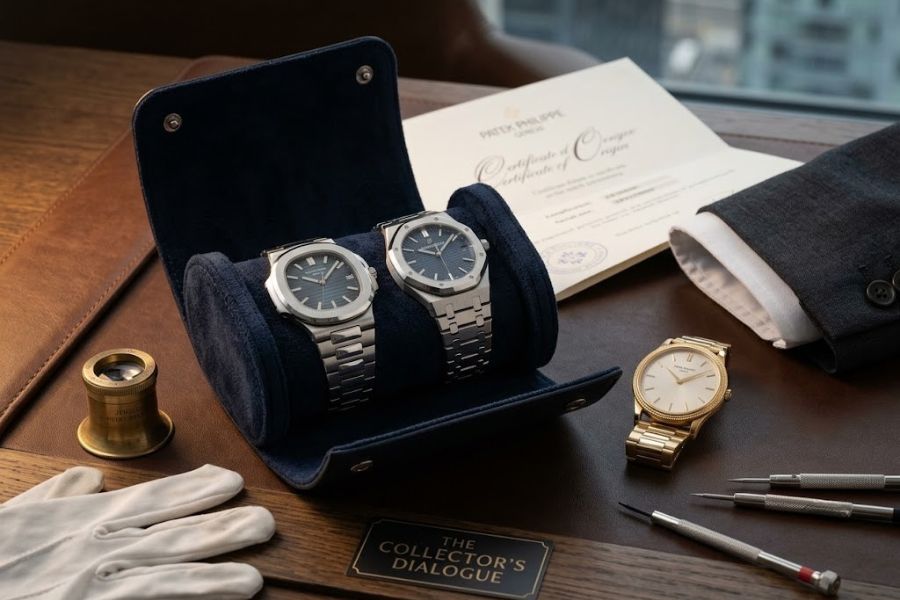
Audemars Piguet, founded in Le Brassus in 1875, is most famous for a single watch: the Royal Oak. Designed by Gerald Genta in 1972, the Royal Oak was the world’s first luxury sports watch in stainless steel and it changed the industry permanently. The brand has built much of its modern identity around that legendary design and its bold derivatives, including the Royal Oak Offshore and the Royal Oak Concept lines. Collectors looking to acquire these bold designs often browse the secondary market to bypass long retail waitlists, making it easy to find an authentic Audemars Piguet watch.
Did You Know?
Audemars Piguet produces approximately 40,000 to 50,000 watches per year, according to Swiss luxury industry market insights. Patek Philippe produces an estimated 60,000 to 70,000, though the company has never confirmed an official figure. Both are incredibly small by industry standards: Rolex produces roughly one million pieces annually.
Which Holds Its Value Better
This is the question most buyers actually want answered, and the honest answer is that it depends heavily on the specific reference and configuration.
As a brand, Patek Philippe has the strongest all-round track record for value retention. The Nautilus 5711 became the most discussed example of watch market appreciation in the past decade, reaching pre-owned prices well above its retail baseline. After Patek discontinued it, the frenzy stabilized, but secondary market values remain exceptionally strong. The Aquanaut 5167 has seen similar, highly resilient appreciation due to global supply constraints.
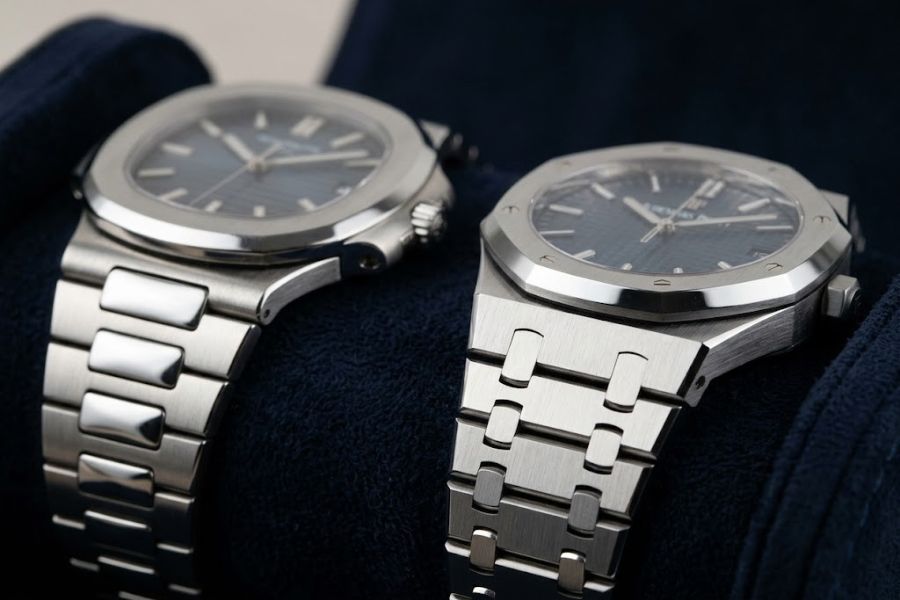
Audemars Piguet Royal Oak references in steel have followed a parallel trajectory. The Royal Oak 15202 Jumbo in steel remains virtually impossible to obtain at retail, causing secondary market values to climb. The more common Royal Oak 15400 and 15500 series hold value exceptionally well but experience slightly higher volatility based on market trends. Serious buyers looking to secure these references can explore pricing dynamics directly via an active Audemars Piguet buy and sell platform.
| Metric | Patek Philippe | Audemars Piguet |
|---|---|---|
| Overall Value Retention | Excellent across most references | Strong on Royal Oak steel |
| Most Liquid Pre-owned References | Nautilus 5711 and 5726 | Royal Oak 15400 and 15500 |
| Typical Pre-owned Entry (CAD) | $25,000 (Calatrava) to $90,000+ (Nautilus) | $35,000 (RO steel entry) to $80,000+ |
| Volatility | Lower due to a highly diverse lineup | Higher due to Royal Oak concentration |
Entry-Level Options for Each Brand
Both brands are aspirational by definition, but the entry point on the pre-owned market is far more accessible than many assume if you look outside the primary hype models.
Patek Philippe Calatrava. The Calatrava is Patek’s dress watch line and represents the most accessible entry point into the brand. Pre-owned gold examples from the 1990s and 2000s can be sourced via our comprehensive watch collection. These are not flashy sports models, but they are genuine Patek Philippe watches featuring industry-defining mechanical finishing and excellent long-term durability.
Audemars Piguet Royal Oak (non-Jumbo). The 36mm, 37mm, and 41mm Royal Oak variants in steel offer a more approachable price point than the ultra-thin Jumbo references. Pre-owned 15400 and 15500 pieces trade steadily on the secondary market. Physical condition matters enormously on these models because the iconic integrated bracelet is highly complex, and full polishing on worn sharp edges requires specialized equipment.
The women’s segment. Both brands offer exceptional ladies’ versions of their flagship models at lower pre-owned price points. A quartz or automatic ladies’ Nautilus or a ladies’ Royal Oak can serve as perfect entry points into genuine Holy Trinity horology.
The Investment Case for Each
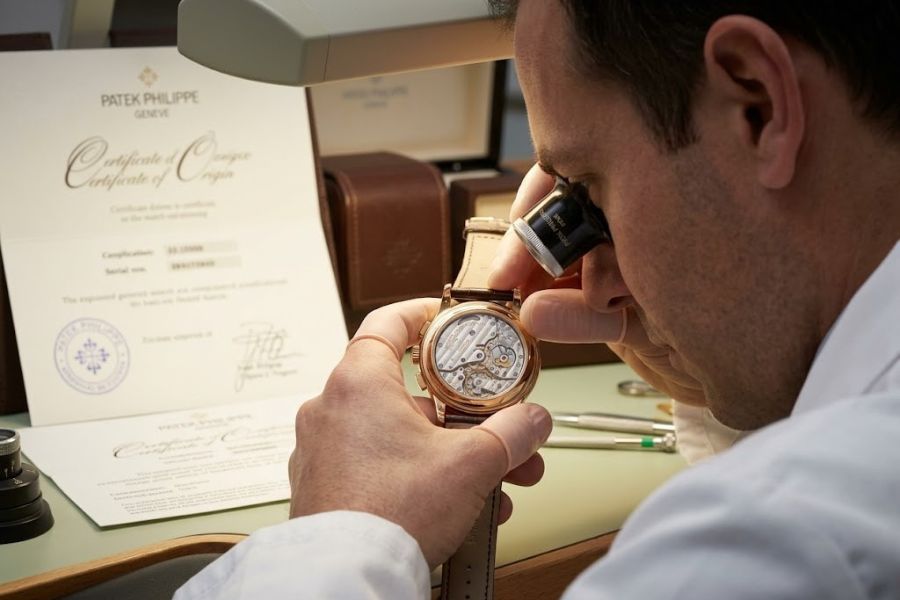
Before treating either brand as a pure financial investment asset, it is critical to understand the allocation risks that the broader watch market often glosses over.
People Often Ask If They Can Buy a Patek or AP at Retail
Both brands strictly allocate their most desirable pieces to trusted clients with long, documented purchase histories at their authorized boutiques. Walking into an authorized dealer without a relationship and buying a Nautilus or Royal Oak Jumbo is virtually impossible. The pre-owned market remains the realistic path for most buyers, explaining why secondary market values command premiums on top references.
The case for Patek Philippe as a stable store of value is stronger than for Audemars Piguet in absolute terms. Patek maintains a highly diverse product line across sports models, dress watches, and grand complications. This diversification means the brand’s reputation is not entirely dependent on a single design language.
That said, AP’s Royal Oak in steel has been one of the most reliable value-retention stories in luxury watches for the past several decades. It is a blue-chip horological design that is highly unlikely to plummet in value. The main risk is portfolio concentration: Audemars Piguet’s modern story is built heavily around the Royal Oak silhouette, which represents both its greatest strength and its primary vulnerability.
Buying Patek or AP in Toronto
The local Toronto market has an exceptional selection of pre-owned Patek and AP pieces, particularly when navigating through specialized secondary market experts. Toronto Watch Exchange regularly carries fully authenticated examples across both independent Swiss brands. However, strict due diligence remains essential regardless of where you complete your acquisition.
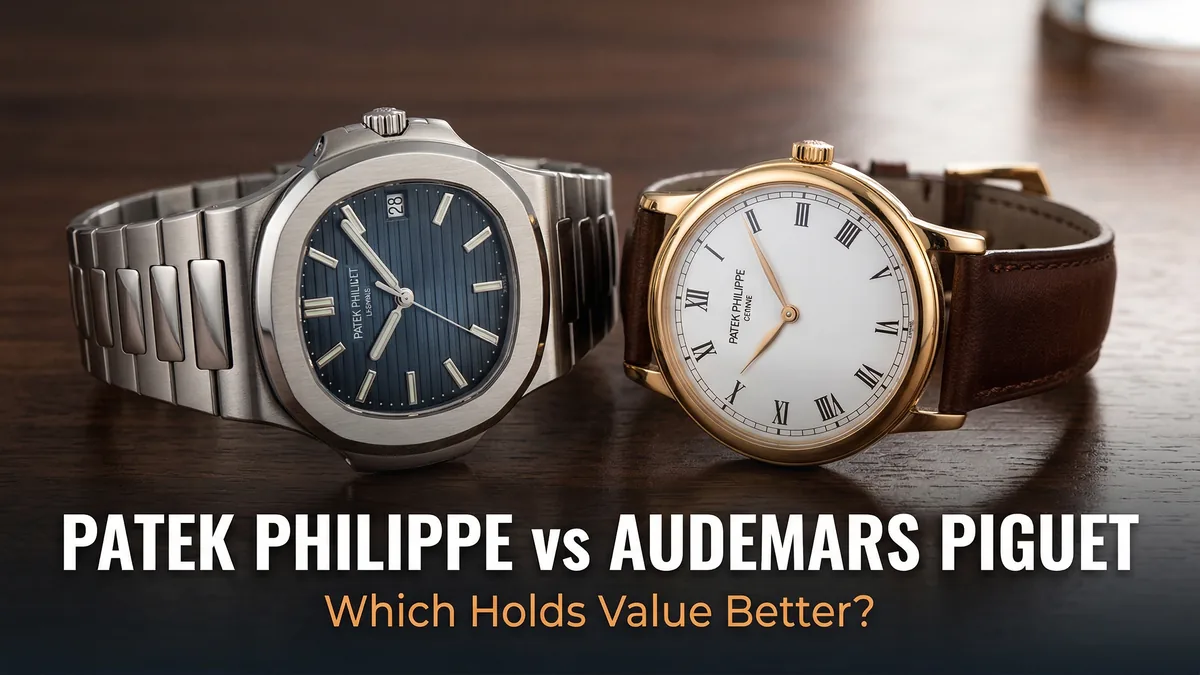
Key factors to verify on any pre-owned Patek or AP purchase include confirming that the case reference and movement numbers match the paperwork exactly, checking the integrated bracelet links for stretch, requesting a timing report before finalizing the sale, and verifying that any past maintenance was executed by factory-authorized service providers or certified master watchmakers.
Which Brand Is Right for You
Choose Patek Philippe if you value understated design language, complex mechanical complications, prefer traditional dress or mid-size proportions, and want a highly diversified brand lineup with the strongest historical value retention across auction houses worldwide.
Choose Audemars Piguet if the geometric Royal Oak design genuinely excites you, you prefer a watch with a bolder wrist presence that is instantly recognizable in daily life, and you are comfortable with an asset whose value is concentrated inside one iconic sports luxury silhouette.
Either way, prioritize buying what you actually want to wear. Both brands retain value incredibly well over the long term, but collectors who buy an elite timepiece purely as an investment vehicle without enjoying the design are rarely as satisfied as those who purchase out of genuine admiration for the watchmaking artistry.
Frequently Asked Questions
Which Brand Holds Value Better Between Patek Philippe and Audemars Piguet
Patek Philippe maintains a slightly stronger across-the-board track record for long-term value retention due to its highly diversified product catalog. While specific stainless steel Audemars Piguet Royal Oak references match or occasionally exceed Patek’s short-term appreciation, AP’s high concentration in a single model style carries slightly higher market volatility risk.
What Is the Cheapest Way to Own a Patek Philippe Watch?
The most accessible entry point on the pre-owned market is through vintage or neo-vintage Calatrava references from the 1990s and early 2000s, which can typically be found in solid gold variants. Ladies’ versions of the Aquanaut and Nautilus also present lower entry price points on the secondary market than full-size men’s sports references.
Can I Buy a Nautilus or Royal Oak at Retail in Toronto?
It is extremely unlikely for the most desirable references without a substantial multi-year purchase history. Authorized boutiques allocate these ultra-high-demand steel models exclusively to established VIP clients. The secondary market remains the realistic route for the vast majority of local buyers looking to skip the indefinite waitlists.
How Much Does It Cost to Service a Patek Philippe or AP Watch?
A standard factory overhaul for a time-only or simple date caliber typically runs upwards of $1,200 to $2,500, depending on the specific complications and necessary components. Specialized independent watchmakers with specific brand training can perform standard movement maintenance at lower rates, with recommended service intervals occurring every five to seven years.
Is Buying a Pre-owned Patek or AP Safer Than Buying New?
In many financial aspects, yes. Pre-owned market prices reflect true, organic global demand rather than artificial retail scarcity or forced boutique bundling practices. You also bypass waitlists entirely. The primary risks involve verifying absolute authenticity and physical condition, both of which are easily managed when acquiring through a vetted, reputable dealer who carefully inspects and authenticates every piece before sale.
Keep Reading
Browse authenticated Patek Philippe and Audemars Piguet pieces at Toronto Watch Exchange. We buy, sell, and appraise luxury watches across all major high-end Swiss brands.