
You look down at your wrist to check the time. Yesterday, your watch was synced perfectly with your iPhone. Today, it is three minutes ahead. You reset it, but by tomorrow morning, it has gained another few minutes. Panic sets in. Did you knock it against a doorframe? Is the movement broken? Do you need an expensive service? Before you rush to a service center and spend hundreds of dollars, take a deep breath. If your Rolex running fast is a sudden new symptom, the culprit is likely invisible, silent, and extremely easy to fix. We are talking about magnetism.
At Toronto Watch Exchange, we see this issue constantly. In our modern, tech-heavy world, magnetic fields are the silent killers of watch accuracy. This guide will walk you through exactly why this happens, how to test for it at home, and how to get your timepiece back to perfect precision.
Is Your Rolex Running Fast or Slow? Diagnosing the Symptoms
To understand what is happening inside your case, we first need to look at the symptoms. Mechanical watches are living, breathing machines (metaphorically speaking), and the way they fail tells us a lot about the cause.
What Does It Mean When a Rolex Is Running Fast?
If your watch is gaining significant time, usually more than 15 or 20 seconds a day, something has fundamentally changed the geometry of the hairspring. When we see a client with a Rolex running fast, specifically gaining minutes per day rather than seconds, magnetism is the diagnosis 90% of the time.
The issue appears suddenly. One day, the watch is performing within COSC specs (The Official Swiss Chronometer Testing Institute standards of -4/+6 seconds per day), and the next day it is galloping ahead.

What If I Have a Rolex Running Slow Instead?
We need to make a clear distinction here. While magnetism speeds up a watch, other issues slow it down. If you are searching for answers about a Rolex running slow, the problem is rarely magnetism.
A watch that loses time is usually suffering from dried lubricants, debris in the gear train, or specific movement issues. In fact, if you own a newer model, you might be experiencing a known “low amplitude” phenomenon. You can read our deep dive on that specific topic here: Rolex running slow and the 3235 issue.
- Dried Lubricants: The oils inside the movement have dried up, creating friction.
- Debris or Dirt: Tiny particles are gumming up the gear train.
- Mainspring Fatigue: The power reserve isn’t holding enough tension.
If your issue is the watch losing time, that is a classic sign that it is time for a routine service. However, if it is sprinting ahead, read on, because you might be able to fix this yourself.
What Is the Number One Reason For a Rolex Running Fast Suddenly?
To understand the problem, you have to understand the heart of your watch: the balance wheel and the hairspring.
The Invisible Enemy: Magnetism Explained
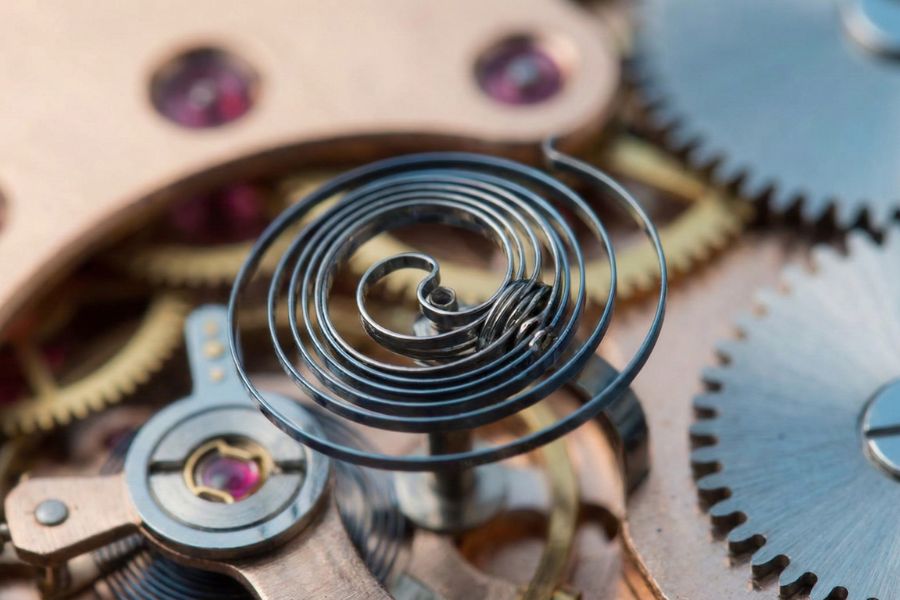
Inside your Rolex movement, there is a tiny, coiled spring called the hairspring. It breathes in and out, regulating the swing of the balance wheel. This back-and-forth swing is the “tick-tock” of your watch.
Most hairsprings, especially in vintage models, are made of metal alloys containing iron. When these alloys are exposed to a strong magnetic field, the coils of the spring become magnetized.
How the Hairspring Affects Accuracy
When the hairspring gets magnetized, the coils attract each other. Instead of breathing freely, some of the coils stick together.
Think of it like a guitar string. If you shorten a guitar string by pressing your finger down on the fretboard, the pitch gets higher and the vibration gets faster. The same physics apply here. By “sticking” together, the effective length of the hairspring shortens.
The Result of a Shortened Spring
- The balance wheel oscillates much faster.
- The tick-tock speed increases.
- The hands on the dial move faster than real time.
This is why a magnetized watch doesn’t just run a little fast. It often runs wildly fast.
Which Everyday Items Are Secretly Magnetizing Your Watch?
You might be thinking, “I don’t work in a factory or a lab, so I am safe.” Unfortunately, that is not true anymore. Modern life is full of “rare earth” magnets that are strong enough to wreak havoc on a mechanical movement.
We often hear customers say they haven’t been near any magnets, only to realize they do one of the following things daily.
Danger Zones For Magnetizing Rolex Watches
Here is a breakdown of the most common offenders we see causing issues with a Rolex running fast:
| The Item | The Hidden Danger | Risk Level |
|---|---|---|
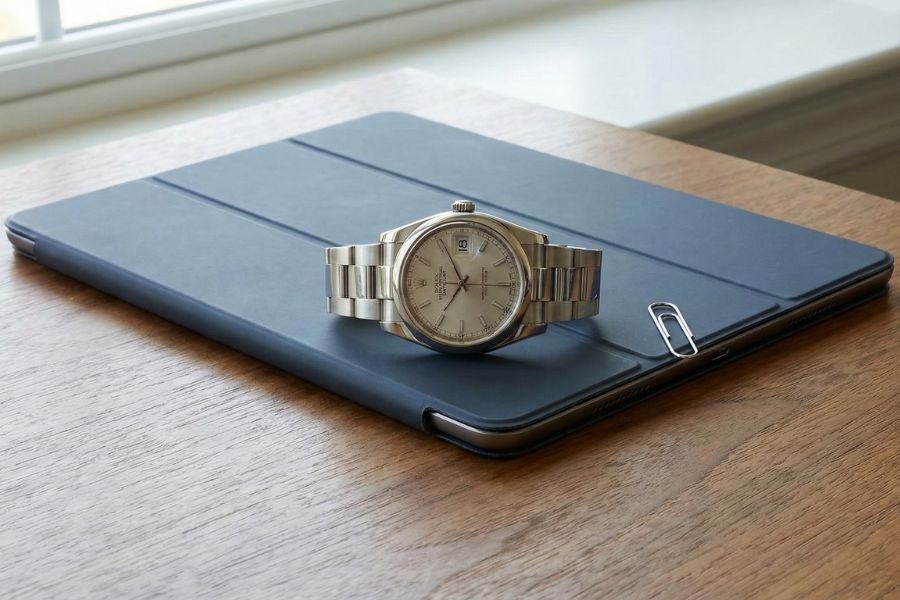
| iPad & Tablet Covers | The “Smart Cover” sleep/wake magnets are incredibly strong. Resting your wrist on a folded cover while typing is the #1 cause we see. | Extreme |
| Laptops | Speakers and hard drive magnets are located near the palm rest area where your watch sits while you type. | High |
| Women’s Handbags | The magnetic clasp on purses often uses neodymium magnets. Digging for keys puts the watch right against it. | High |
| Smartphones | Newer phones with MagSafe charging rings have strong circular magnetic fields on the back. | Medium |
| Airport Security | Security wands and the motors of the X-ray belt can influence older watches. | Low/Medium |
Are Modern Rolexes Immune to Magnets?
This is a common misconception. In the early 2000s, Rolex introduced the Parachrom Bleu hairspring. This is made from a niobium-zirconium alloy, which is paramagnetic. This means it is highly resistant to magnetic fields.
However, “resistant” does not mean “proof.” While a modern Rolex watch is much harder to magnetize than a vintage Datejust from the 1980s, we still see modern Submariners and GMT-Masters getting magnetized if they come into direct contact with strong neodymium magnets.
The Exception: The Rolex Milgauss
The Rolex Milgauss was specifically designed for scientists working in high-magnetic environments (like CERN). It uses a soft-iron Faraday cage to shield the movement.
How Can I Test If My Rolex Is Magnetized at Home?
Before you try to fix anything, you need to confirm the diagnosis. You do not need expensive equipment to do this. You just need a simple tool you might already have in your camping gear.
The Compass Test: A Step-by-Step Guide
This is the gold standard for a quick home check.
- Set Up: Place a standard hiking compass flat on a wooden table (avoid metal tables).
- Stabilize: Wait for the compass needle to settle and point North.
- The Approach: Hold your Rolex about 2 inches above the compass.
- The Movement: Slowly lower the watch directly over the compass needle, and then move it slowly around the perimeter of the compass.
- The Verdict:
- If the needle stays still: Your watch is not magnetized.
- If the needle swings wildly or follows the watch: Your watch is magnetized.
Using Smartphone Apps for Accuracy Testing
While the compass tests for magnetism, you also want to measure exactly how fast the watch is running. There are several apps available (like “Watchville” or various “Timeographer” apps) that listen to the beat of your watch or help you track it against an atomic clock.
If your tracking shows a gain of +30 seconds or +1 minute per day, combined with a positive compass test, you have solved the mystery.
How Do I Fix a Magnetized Rolex Watch?
The good news is that fixing a magnetized watch is one of the cheapest and easiest repairs in the world of horology. It does not require opening the case, breaking the waterproof seal, or touching the movement.
Professional Demagnetization Services
If you are uncomfortable doing this yourself, you can visit a professional. Most independent watchmakers have a high-powered bench demagnetizer.
Here is what you can expect:
- Time: The process takes about 10 seconds.
- Cost: Many watchmakers will do this for free or for a nominal fee (the price of a lunch).
- Safety: It is completely safe for the watch.
The DIY Demagnetizer Tool Method
If you are an enthusiast who owns multiple mechanical watches, it is worth buying your own tool. You can find blue box demagnetizers online for under $20.
How to Use a Blue Box Demagnetizer
Using these tools incorrectly can actually make the magnetism worse, so follow these steps carefully:
- Plug in the device.
- Hold the watch just above the designated area on the box (plastic side).
- Press and hold the red button/switch. A light should turn on.
- While holding the button, slowly lift the watch vertically away from the device. Imagine you are lifting it up a string.
- Do not release the button until the watch is at least 2 feet away from the box.
- Release the button.
This process scrambles the magnetic field and then pulls it out of the watch. Perform the compass test again immediately after. If the needle doesn’t move, you have successfully fixed your watch!

When Should I Send My Rolex for a Full Service?
Sometimes, the compass test comes back negative, but you still have a Rolex running fast. This indicates a mechanical issue that requires professional intervention.
Signs of Mechanical Damage vs. Simple Magnetism
If magnetism isn’t the cause, the hairspring may be physically tangled or “caught.” This can happen if the watch suffers a hard shock, like dropping it on a bathroom floor or banging it against a door frame.
When a watch is dropped, the hairspring can sometimes jump over the regulator pin. This drastically shortens the active length of the spring, causing the watch to run extremely fast (sometimes gaining an hour a day).
Impact Damage and Regulation
Unlike magnetism, you cannot fix a tangled hairspring from the outside. A watchmaker needs to open the back and carefully reset the spring. While they are in there, they will likely check for other shock-related damage, such as a broken balance staff.
Additionally, if you have a Rolex running slow or experiencing erratic timekeeping (fast one day, slow the next), this suggests the lubricants have degraded or the movement is dirty. This requires a full overhaul, which involves disassembling, cleaning, oiling, and regulating the entire movement.
How Can I Protect My Rolex From Future Speed Issues?
Prevention is always better than cure. While you shouldn’t be afraid to wear your watch, being aware of your surroundings can save you a trip to the watchmaker.
Storage Tips and Best Practices
When you take your watch off at night, pay attention to where you lay it down.
- The Nightstand: Avoid placing your watch directly next to your alarm clock or smartphone charging dock.
- Travel: When going through airport security, it is generally safe to wear your watch through the metal detector. However, avoid putting it in the bin right next to your laptop or iPad.
- The Laptop Habit: Try to break the habit of resting your left wrist (or whichever wrist you wear your watch on) directly on the laptop speaker area while typing.
The Importance of Regular Maintenance
Whether you bought a vintage piece or a brand new model from our curated shop collection, mechanical watches need care. Magnetism is a nuisance, but it is not permanent damage. Neglecting service intervals, however, causes wear and tear that is much more expensive to fix.
If your watch is older than 5-7 years and hasn’t been serviced, accuracy issues are a sign that it is time for a check-up. Keeping the movement clean and oiled ensures that when you do encounter a magnet, the only problem you have to deal with is the magnetism, not a combination of issues.
If Your Rolex is Running Fast, Don’t Panic
To recap, if you find your Rolex running fast unexpectedly, follow this simple checklist:
- Check the gain: Is it gaining minutes a day?
- Check the history: Did you drop it? If not, suspect magnets.
- Do the Compass Test.
- Demagnetize (Shop or DIY).
- Monitor for 24 hours.
For most of you, this will solve the problem instantly. Your Rolex is a robust tool watch designed to handle the extremes of diving, flying, and exploring. A little magnetic field might confuse it for a moment, but it won’t stop it from lasting a lifetime.