
You understand the frustration if you’ve ever attempted to purchase a new Rolex, particularly a steel sports model like the GMT-Master II, Daytona, or Submariner. When you approach an authorized dealer with a common question, you always receive the same response: “We don’t have it in stock, but you can join the waitlist.” Months pass. Even years. Nevertheless, one of the most well-known luxury watch manufacturers in the world is Rolex. But what is actually happening, then? Is Rolex genuinely increasing production for more watches than ever before? Or is all of this a scarcity illusion?
We at Toronto Watch Exchange have years of experience in the industry. We have followed every change in the market, every increase in price, and every rumor that either came to pass or didn’t. And something significant is taking place in 2025. Rolex is growing. Not in the way you might expect, though. Flooding the market is not the goal here. It all comes down to long-term planning, meticulous control, and preserving the air of exclusivity while production steadily increases.
Let’s pull back the curtain.
What is Going On With Rolex Watch Production in 2025
The numbers come first. According to industry analysts, Rolex manufactures between 1.1 and 1.25 million timepieces a year. That’s a big number. Indeed, it is enormous, particularly in contrast to other luxury Swiss brands. The interesting part, though, is that not all Rolex watches are made equal in the eyes of collectors. Rolex is aware of this.
The “classic” models, the Datejust, Oyster Perpetual, and Day-Date, receive about 55% of that yearly production. These are stunning, dependable, and classic, but they aren’t the ones driving boutiques crazy. The remaining forty-five percent? Only the “Professional” lines, Submariner, Daytona, GMT-Master II, and Explorer are allowed to use that. The grails. The symbols. The models that sell out before they are even put on display.
So yes, Rolex is making more watches. But the increase is surgical. Strategic. Not chaotic.
Why Is the Rolex Production Rising?
In early 2025, Rolex confirmed the activation of two temporary production sites in Romont and Villaz-Saint-Pierre. These facilities, employing 250 to 300 skilled workers, are designed to accelerate manufacturing capacity in the short term. Think of them as tactical reinforcements, helping Rolex meet rising global demand without compromising quality.
But the real game-changer? The Bulle mega-factory.
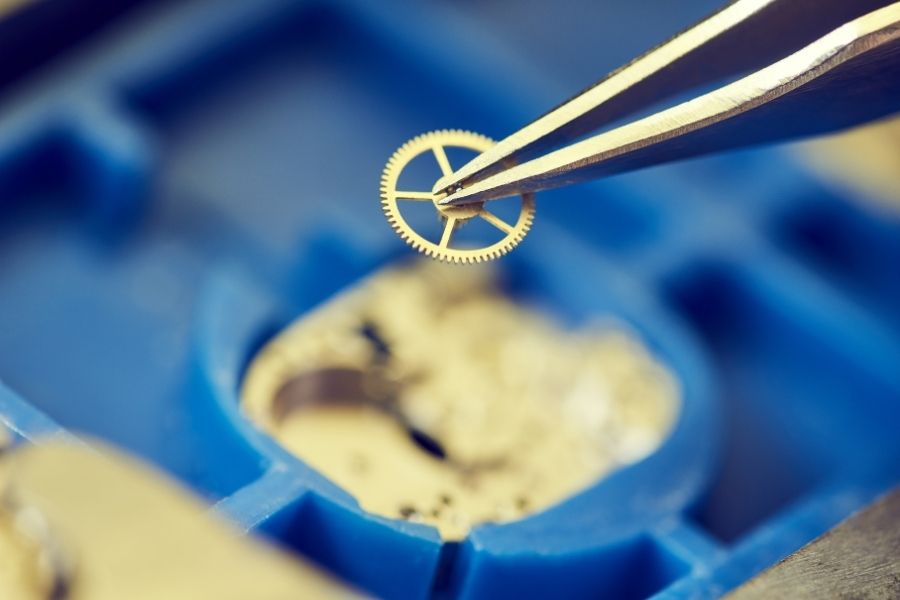
This is no ordinary expansion. It’s a billion Swiss Franc investment. A 2,000-worker facility. A state-of-the-art horological campus that won’t be fully operational until 2029. Why does this matter? Because it signals Rolex isn’t just reacting to demand, it’s planning for it. Decades ahead. And yet, even with this massive capacity on the horizon, don’t expect waitlists to vanish. Rolex doesn’t operate like a fast-fashion brand. It operates like a central bank of luxury: controlling supply to preserve value.
Here’s a quick snapshot of where things stand:
Metric |
Details & Figures |
Significance for 2025 |
|---|---|---|
| Annual Production | 1.1 – 1.25 million watches | High volume, but distribution creates artificial scarcity |
| Production Mix | ~55% Classic Models ~45% Professional Models | Most production isn’t going to the “hottest” models |
| Temporary Facilities | Romont & Villaz-Saint-Pierre | Short-term boost; confirms production is increasing now |
| Permanent Facility | Bulle (operational 2029) | Long-term capacity play; won’t flood market, will stabilize it |
The ADs & The Waitlist: How Rolex Controls the Market
Let’s be honest. The “shortage” of Rolex watches isn’t a production problem. It’s a distribution strategy.
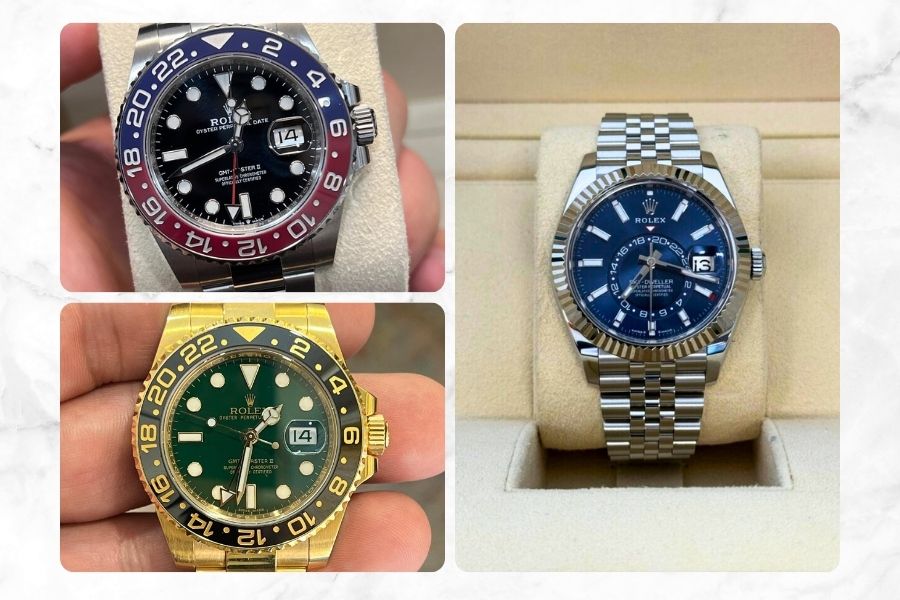
Authorized Dealers, the official gatekeepers of new Rolex watches, don’t get to order whatever they want. Rolex controls the flow. And while the company never confirms it publicly, industry insiders have long whispered about the “70/30 rule.” The idea? For every three “classic” or less popular models an AD sells, they might earn the right to receive one highly coveted sports model. It’s not written in any contract. But it’s widely observed. And it works.
Why? Because it forces dealers to move inventory they might otherwise struggle with, like yellow gold Day-Dates or two-tone Datejusts, while keeping the steel GMTs and ceramic Submariners in artificially short supply. This isn’t a glitch. It’s the system.
Then there’s the relationship game.
Walk into any high-volume Rolex AD and ask for a Daytona. You’ll likely be met with a polite smile and a request to “build a relationship.” What does that mean? It means buy something else first. Show loyalty. Visit in person. Be patient. Be respectful. Some ADs even keep internal “spend history” logs, tracking who’s purchased what, and when they might be “eligible” for an allocation.
It’s not fair. But it’s effective.
The average wait time for a stainless steel Daytona? Three to five years. For a Submariner? Six to twelve months, if you’re lucky. And these numbers haven’t meaningfully dropped in 2025, despite the new Rolex production sites. Why? Because Rolex isn’t trying to eliminate scarcity. It’s trying to manage it.
The Secondary Rolex Market in 2025: From Bubble to Equilibrium
If you’re not willing to wait, you turn to the secondary market. And here’s where things have changed dramatically since 2022.
Back then, prices were insane. A retail $10,000 Submariner was trading for $18,000. A $15,000 Daytona? Try $35,000. The market was overheated, fueled by pandemic savings, low interest rates, and pure speculative frenzy.
Then came the correction.
Throughout 2023 and into 2024, prices dropped, sometimes sharply. Collectors got nervous. Investors pulled back. The bubble burst. But by 2025, things have stabilized. We’re not back to 2022 highs. And we’re not crashing either. We’re in a new equilibrium.
Most popular Rolex models now trade at a premium above retail, but nowhere near the peaks of two years ago. A Submariner might sit at 20 to 30 percent over retail. A Daytona? Maybe 40 to 50 percent. Still expensive. Still desirable. But no longer irrational.
And then came January 2025.
Rolex quietly raised its retail prices. Stainless steel models saw a modest 1 percent bump. But gold and precious metal watches? Those jumped as much as 7 percent. That’s not an accident. Rolex knows the secondary market has cooled. This price adjustment is a nudge, a way to recalibrate perceived value and keep the momentum alive.
What does this mean for you?
If you’re buying, the secondary market is more rational than it’s been in years. Now is the perfect time to invest in an authentic used Rolex, fully verified, fairly priced, and backed by years of market expertise. You’re not getting “cheap” Rolexes, but you’re also not getting ripped off by speculative mania.
If you’re selling, now is still a strong time. Prices have bottomed out and are holding steady. At Toronto Watch Exchange, we guarantee the best value for your money based on the latest market data, whether you’re looking to upgrade, downsize, or cash out.
New Models & Disproven Rumors
Rolex doesn’t do leaks. It doesn’t do press releases. It does unveilings, at Baselworld, at private events, with zero warning.
In 2025, the brand surprised everyone by introducing the “Land-Dweller”, a completely new model with a bold design philosophy and the revolutionary Calibre 7135 movement. This isn’t just another Oyster Perpetual with a new dial. This is a technical leap. The movement alone carries 32 patent applications, including the new Dynapulse escapement, a genuine innovation in mechanical watchmaking.
Then came the GMT-Master II updates. Not the “Coke” (red and black) bezel everyone begged for. Instead, Rolex dropped two ceramic-dial variants: one with a “Sprite-Hulk” green-and-black combo, and another in white gold with a matching ceramic dial. Unexpected. Beautiful. And very, very Rolex. For a full breakdown of every 2025 update and what it means for collectors, explore our detailed guide on Rolex’s 2025 model evolution.
What didn’t happen?
The 37mm Submariner? Nowhere to be seen. The return of the “Pepsi” on steel? Still absent. The solid gold Explorer? Pure fantasy. Several Rolexes are discontinued for 2025, and the lineups are changing along with the new announcements and trends.
Rolex listens, but not to Reddit threads. It listens to its own rhythm. Its own legacy. Its own long-term vision. And in 2025, that vision is clearer than ever: innovate where it matters, control what you can, and never, ever, sacrifice exclusivity for volume.
Rolex vs. The Competition: A Production Perspective
To truly understand Rolex’s position, you need to see it next to its peers. Patek Philippe makes around 62,000 watches a year. Audemars Piguet? Roughly 50,000. Combined, that’s 112,000 timepieces. Rolex makes more than that every single month.
Here’s the comparison:
| Brand | Estimated Annual Production | Philosophy | Distribution |
|---|---|---|---|
| Rolex | 1.1 – 1.25 million | Durability, innovation, universal appeal | Authorized Dealers |
| Patek Philippe | ~62,000 | Hand-finishing, heritage, exclusivity | Authorized Dealers |
| Audemars Piguet | ~50,000 | Artistic design, bold statements | Boutique / Direct |
Rolex produces over 15 times more watches than Patek and AP combined. And yet, it’s harder to get a steel Submariner than a Royal Oak or a Nautilus. Why? Because scarcity isn’t about how many you make. It’s about how many you let people buy.
Patek and AP achieve exclusivity through low volume and handcrafted complexity. Rolex achieves it through controlled distribution, marketing mastery, and psychological ownership. You don’t just want a Rolex. You want the one you couldn’t get easily. The one you waited for. The one that proves you belong.
That’s the paradox. And Rolex owns it.
What This Means for Buyers, Sellers, and Collectors in 2025
So where does this leave you?
- If you’re trying to buy new, patience is still the currency. Building a relationship with an authorized dealer takes time and there’s no guarantee you’ll get the model you want, even after years of loyalty. But here’s the alternative: you don’t have to wait. At Toronto Watch Exchange, we help clients acquire brand-new, never-worn Rolex watches through our global sourcing network. Whether it’s a Submariner, Daytona, or the latest 2025 release, we can locate and secure it for you, no waitlist, no games, no “spend history” required. Don’t chase rumors, they’re almost always wrong. And don’t expect the Bulle factory to change anything before 2029. Let us cut through the noise and get you the watch you actually want, today.
- If you’re buying pre-owned: you’re in a sweet spot. The market has corrected. Prices are rational. Selection is strong. And at Toronto Watch Exchange, we’ve spent years refining our process to ensure you get the best value, whether you’re acquiring your first Rolex or your fifth.
- If you’re selling: now is still a healthy time. The secondary market is stable. Demand remains high. And with Rolex’s 2025 price increases, your watch may be worth more than you think.
Rolex Production Is Up. Your Wait Doesn’t Have to Be.
Yes, Rolex is making more watches. But not to make them easier to get. To make them easier to control. The new factories? They’re not about flooding the market. They’re about future-proofing it, ensuring that even as global demand grows, Rolex can maintain its grip on supply, value, and perception. The waitlists? They’re not broken. They’re by design. The secondary market? It’s not dead. It’s matured. Rolex isn’t just selling watches. It’s selling access. Status. Legacy. And in 2025, that formula is working better than ever.
Whether you’re buying, selling, or just watching from the sidelines, understanding the mechanics behind a Rolex production gives you an edge. And at Toronto Watch Exchange, we’re here to help you use it. We’ve been in the business for years, and in that time, we’ve developed a streamlined approach to ensure an outstanding experience. Whether you’re looking to acquire a new piece, sell your Rolex, or sell one of your luxury watches, we guarantee the best value for your money based on the latest market data. Because in the world of Rolex, knowledge isn’t just power, it’s profit.